

As a seasoned supplier in the field of automotive castings, I've had the privilege of witnessing firsthand the critical role that casting processes play in the automotive industry. Among the various casting methods available, sand casting and die casting stand out as two of the most widely used techniques for producing automotive parts. Each method has its unique characteristics, advantages, and limitations, which make them suitable for different applications. In this blog post, I'll delve into the differences between sand casting and die casting for automotive parts, exploring their processes, materials, costs, and applications.
Process Comparison
Sand Casting
Sand casting is one of the oldest and most versatile casting methods. It involves creating a mold from a mixture of sand and a binder, which is then packed around a pattern of the desired part. The pattern is removed, leaving a cavity in the sand mold that is filled with molten metal. Once the metal has solidified, the sand mold is broken away to reveal the cast part.
The sand casting process is relatively simple and can be used to produce parts of various sizes and shapes. It is particularly well-suited for producing large, complex parts with intricate details. However, the process is also relatively slow and labor-intensive, as each mold must be created by hand. Additionally, the surface finish of sand-cast parts is typically rough, which may require additional machining or finishing operations.
Die Casting
Die casting, on the other hand, is a more automated and precise casting method. It involves injecting molten metal into a steel mold, or die, under high pressure. The die is typically made up of two halves that are clamped together, creating a cavity in the shape of the desired part. Once the metal has solidified, the die is opened, and the cast part is ejected.
The die casting process is much faster and more efficient than sand casting, as multiple parts can be produced from a single die. It also produces parts with a high degree of accuracy and a smooth surface finish, which often eliminates the need for additional machining or finishing operations. However, the initial cost of creating a die is relatively high, which makes die casting more suitable for high-volume production runs.
Material Compatibility
Sand Casting
Sand casting can be used with a wide range of metals and alloys, including aluminum, iron, steel, and brass. This versatility makes it a popular choice for producing automotive parts that require different materials depending on their application. For example, sand casting can be used to produce engine blocks, cylinder heads, and transmission cases, which are typically made from cast iron or aluminum alloys.
Die Casting
Die casting is primarily used with non-ferrous metals and alloys, such as aluminum, zinc, and magnesium. These materials have low melting points and good fluidity, which makes them well-suited for the high-pressure injection process used in die casting. Die casting is commonly used to produce automotive parts such as engine components, transmission housings, and structural parts, which require high strength and dimensional accuracy.
Cost Considerations
Sand Casting
The cost of sand casting is relatively low compared to die casting, especially for small to medium production runs. This is because the initial tooling costs for sand casting are relatively low, as the molds can be made from inexpensive materials such as sand and clay. Additionally, the sand casting process is relatively simple and does not require expensive equipment or specialized skills.
However, the cost per part can increase significantly for large production runs, as the labor and time required to create each mold can become a limiting factor. Additionally, the rough surface finish of sand-cast parts may require additional machining or finishing operations, which can add to the overall cost.
Die Casting
The initial cost of die casting is relatively high, as the dies must be made from high-quality steel and require precision machining. However, the cost per part can be significantly lower for high-volume production runs, as the die can be used to produce multiple parts with a high degree of accuracy and repeatability. Additionally, the smooth surface finish of die-cast parts often eliminates the need for additional machining or finishing operations, which can further reduce the overall cost.
Applications
Sand Casting
Sand casting is commonly used to produce large, complex automotive parts that require a high degree of flexibility in terms of design and material selection. Some examples of automotive parts that are typically produced using sand casting include:
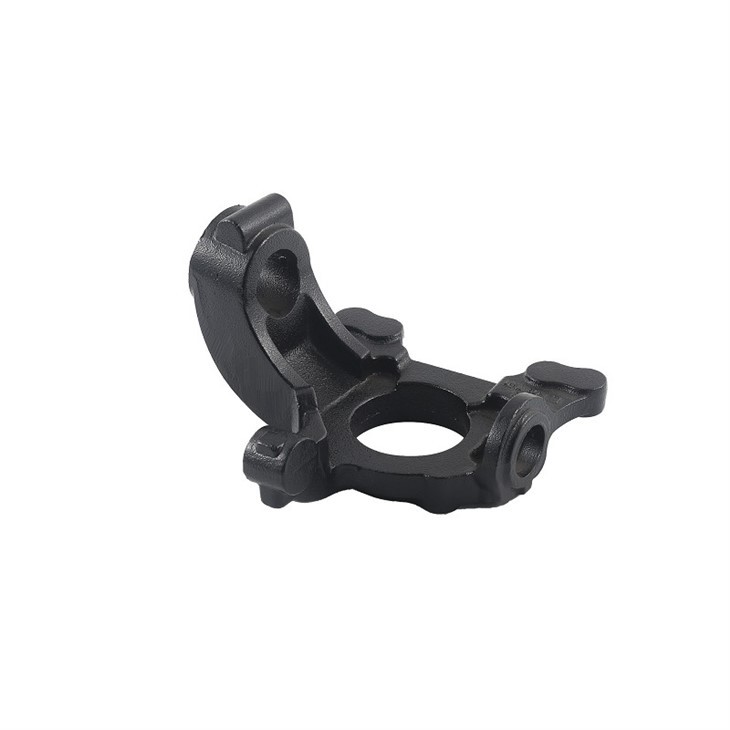

- Automobile Components Casting: Sand casting is used to produce a wide range of automobile components, including engine blocks, cylinder heads, and transmission cases.
- Steering Knuckle Castings: Steering knuckles are critical components of the automotive steering system, and sand casting is often used to produce them due to their complex shape and high strength requirements.
- Automotive Brake Disc Castings: Brake discs are essential for the safe operation of a vehicle, and sand casting is commonly used to produce them due to their large size and high heat resistance requirements.
Die Casting
Die casting is commonly used to produce small to medium-sized automotive parts that require a high degree of precision and dimensional accuracy. Some examples of automotive parts that are typically produced using die casting include:
- Engine Components: Die casting is used to produce a variety of engine components, such as pistons, connecting rods, and valve covers.
- Transmission Housings: Transmission housings are critical components of the automotive transmission system, and die casting is often used to produce them due to their complex shape and high strength requirements.
- Structural Parts: Die casting is also used to produce structural parts of a vehicle, such as door frames, seat frames, and suspension components.
Conclusion
In conclusion, sand casting and die casting are two of the most widely used casting methods for producing automotive parts. Each method has its unique characteristics, advantages, and limitations, which make them suitable for different applications. Sand casting is a versatile and cost-effective method for producing large, complex parts with a wide range of materials, while die casting is a more automated and precise method for producing small to medium-sized parts with high accuracy and repeatability.
As a supplier of automotive castings, we understand the importance of choosing the right casting method for each application. We work closely with our customers to understand their specific requirements and provide them with the best possible solution. Whether you need sand-cast or die-cast automotive parts, we have the expertise and experience to deliver high-quality products that meet your needs.
If you're interested in learning more about our automotive casting services or would like to discuss your specific requirements, please don't hesitate to contact us. We look forward to the opportunity to work with you and help you achieve your automotive manufacturing goals.
References
- ASM Handbook, Volume 15: Casting. ASM International, 2008.
- Campbell, J. (2003). Castings. Butterworth-Heinemann.
- Kalpakjian, S., & Schmid, S. R. (2010). Manufacturing Engineering and Technology. Pearson.