

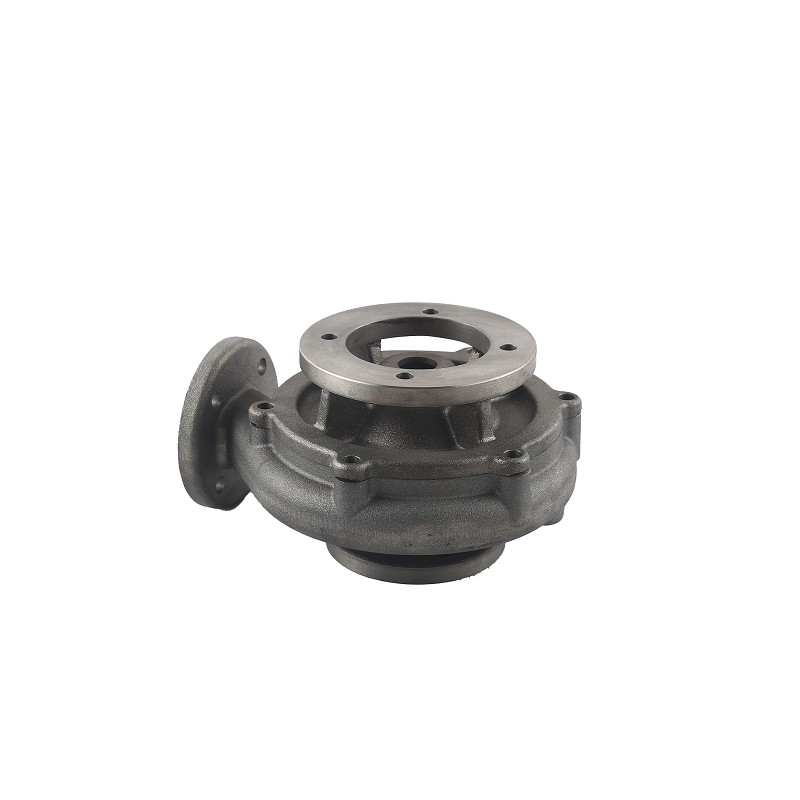
Ensuring the tolerance of a casting impeller is a critical aspect in the manufacturing process, especially for a casting impeller supplier like us. Tolerance refers to the acceptable range of variation in the dimensions, shape, and surface finish of a casting impeller. Maintaining tight tolerances is essential to ensure the impeller's proper functionality, efficiency, and compatibility with the pumping system. In this blog, we will explore the key factors and strategies to ensure the tolerance of a casting impeller.

Understanding the Importance of Tolerance in Casting Impellers
Casting impellers are used in various applications, including pumps, compressors, and turbines. These impellers are designed to transfer energy from the rotating shaft to the fluid, creating flow and pressure. Any deviation from the specified tolerance can lead to reduced performance, increased energy consumption, and premature wear of the impeller and other components in the system.
For example, if the blade thickness of an impeller is not within the tolerance range, it can affect the flow characteristics and efficiency of the pump. Similarly, inaccurate hub diameter or vane angle can cause imbalance, vibration, and noise, leading to reduced reliability and increased maintenance costs. Therefore, ensuring the tolerance of a casting impeller is crucial for delivering high - quality products that meet the customer's requirements.
Factors Affecting the Tolerance of Casting Impellers
1. Pattern Design
The pattern is the first step in the casting process. A well - designed pattern is essential for achieving accurate dimensions of the casting impeller. The pattern should be made of high - quality materials that can withstand the rigors of the casting process without deformation. The design should also take into account the shrinkage allowance, which is the amount by which the casting will shrink as it cools. Incorrect shrinkage allowance can result in castings that are either too large or too small.
2. Mold Making
The quality of the mold has a significant impact on the tolerance of the casting impeller. The mold should be made with high precision to ensure that the shape and dimensions of the impeller are accurately replicated. Any defects or inaccuracies in the mold, such as rough surfaces or improper venting, can lead to casting defects and dimensional variations. For example, if the mold has poor venting, gas bubbles can be trapped in the casting, causing voids and affecting the impeller's strength and dimensions.
3. Casting Process
The casting process itself can introduce variations in the impeller's dimensions. Factors such as pouring temperature, pouring speed, and solidification time can affect the shrinkage and cooling rate of the casting. High pouring temperatures can cause excessive shrinkage, while low pouring temperatures can result in incomplete filling of the mold. Similarly, improper solidification time can lead to non - uniform cooling, which can cause warping and dimensional changes in the impeller.
4. Material Properties
The properties of the casting material also play a role in determining the tolerance of the impeller. Different materials have different shrinkage rates, thermal expansion coefficients, and mechanical properties. For example, cast iron has a different shrinkage rate compared to stainless steel. Understanding the material properties and selecting the appropriate material for the impeller is crucial for achieving the desired tolerance.
Strategies to Ensure the Tolerance of Casting Impellers
1. Advanced Pattern Design and Manufacturing
We use advanced CAD/CAM (Computer - Aided Design/Computer - Aided Manufacturing) technology to design and manufacture patterns with high precision. CAD software allows us to create detailed 3D models of the impeller, taking into account all the necessary design parameters, including shrinkage allowance. CAM technology then translates these digital models into physical patterns with tight tolerances. This ensures that the initial pattern is accurate, which is the foundation for a high - quality casting.
2. Quality Mold Production
Our mold - making process is highly controlled. We use high - precision machining techniques to produce molds with smooth surfaces and accurate dimensions. We also conduct thorough inspections of the molds before using them in the casting process. This includes checking for any surface defects, proper venting, and dimensional accuracy. By ensuring the quality of the mold, we can minimize the chances of casting defects and dimensional variations.
3. Process Control in Casting
During the casting process, we closely monitor and control all the critical parameters. We use advanced sensors and monitoring systems to measure and adjust the pouring temperature, pouring speed, and solidification time. For example, we can use infrared thermometers to monitor the pouring temperature in real - time and make adjustments as needed. By maintaining consistent process parameters, we can achieve uniform shrinkage and cooling, which helps in maintaining the impeller's tolerance.
4. Material Selection and Testing
We carefully select the casting material based on the impeller's application and performance requirements. Before using a new batch of material, we conduct comprehensive material testing to ensure that its properties meet our standards. This includes testing for chemical composition, mechanical properties, and shrinkage rate. By using high - quality materials with known properties, we can better predict and control the dimensional changes during the casting process.
5. Post - casting Machining and Inspection
After the casting is complete, we perform post - casting machining operations to achieve the final dimensions and surface finish of the impeller. Machining processes such as turning, milling, and grinding are used to remove any excess material and to correct any minor dimensional variations. We also conduct thorough inspections using advanced measuring equipment, such as coordinate measuring machines (CMMs). CMMs can accurately measure the dimensions, shape, and surface finish of the impeller, allowing us to verify that it meets the specified tolerance.
Quality Assurance and Customer Satisfaction
At our company, quality assurance is at the core of our operations. We have a dedicated quality control team that monitors every step of the manufacturing process, from pattern design to final inspection. We follow strict quality management systems, such as ISO 9001, to ensure that our products consistently meet or exceed the customer's expectations.
We understand that customer satisfaction is crucial for our business. That's why we work closely with our customers to understand their specific requirements and provide them with customized solutions. Whether it's a standard Casting Impeller or a specialized design, we are committed to delivering high - quality products with tight tolerances.
In addition to casting impellers, we also offer other related products such as Cast Iron Gear and Pumpworks Castings. Our diverse product range allows us to serve a wide range of industries and applications.
Contact Us for Your Casting Impeller Needs
If you are in the market for high - quality casting impellers with tight tolerances, we would love to hear from you. Our team of experts is ready to assist you with your project, from design to delivery. Whether you need a small batch for prototyping or a large - scale production run, we have the capabilities and experience to meet your requirements. Contact us today to discuss your casting impeller needs and start a partnership that will deliver reliable and efficient products.
References
- Campbell, J. (2003). Castings. Butterworth - Heinemann.
- Kalpakjian, S., & Schmid, S. R. (2013). Manufacturing Engineering and Technology. Pearson.
- Metals Handbook: Casting. (1988). ASM International.