

In the intricate world of automotive manufacturing, brake hubs casting stands as a critical process, where precision and quality are non - negotiable. As a seasoned brake hubs casting supplier, I've witnessed firsthand the profound impact that various factors can have on the final product. One such factor that often goes unnoticed but plays a pivotal role is the use of vacuum in the casting process.
The Basics of Brake Hubs Casting
Before delving into the role of vacuum, it's essential to understand the fundamentals of brake hubs casting. Brake hubs are crucial components in a vehicle's braking system, responsible for housing the brake components and providing a stable surface for braking action. The casting process involves pouring molten metal into a mold cavity, which is then allowed to solidify to take the shape of the brake hub.
There are several casting methods available, such as sand casting, die casting, and investment casting. Each method has its own advantages and limitations, but regardless of the method chosen, the quality of the final casting depends on factors like the purity of the metal, the design of the mold, and the presence of any unwanted gases or impurities in the casting.
The Problem with Air and Gases in Casting
In a normal atmospheric environment, air and other gases are present in the mold cavity during the casting process. When molten metal is poured into the mold, these gases can get trapped within the metal. This leads to a variety of defects in the brake hub casting.
One of the most common defects is porosity. Porosity refers to the presence of small holes or voids in the casting. These voids can significantly weaken the mechanical properties of the brake hub, reducing its strength and durability. A brake hub with high porosity is more likely to fail under stress, posing a serious safety risk to the vehicle and its occupants.
Another issue is the formation of oxide inclusions. When the molten metal comes into contact with oxygen in the air, it can form oxides. These oxide inclusions can act as stress concentrators, causing cracks to initiate and propagate within the casting. This not only affects the performance of the brake hub but also shortens its service life.

The Role of Vacuum in Brake Hubs Casting
Vacuum plays a crucial role in addressing the problems associated with air and gases in the casting process. By creating a low - pressure environment in the mold cavity, vacuum helps to eliminate these unwanted elements and improve the quality of the brake hub casting.
Removing Gases
The primary function of vacuum in brake hubs casting is to remove air and other gases from the mold cavity before the molten metal is poured. When the mold is placed in a vacuum chamber and the pressure is reduced, the gases within the mold expand and are drawn out through vents or porous mold materials. This ensures that the molten metal fills the mold cavity without encountering any significant resistance from trapped gases, resulting in a more uniform and dense casting.
By reducing the amount of gas trapped in the casting, vacuum casting minimizes the formation of porosity. The resulting brake hubs have a higher density and better mechanical properties, making them more reliable and durable.
Preventing Oxide Formation
In addition to removing gases, vacuum also helps to prevent the formation of oxide inclusions. Since there is little to no oxygen present in the low - pressure environment created by the vacuum, the molten metal is less likely to react with oxygen and form oxides. This results in a cleaner and more homogeneous casting, with fewer inclusions and a smoother surface finish.
Improving Metal Flow
Vacuum can also enhance the flow of molten metal within the mold cavity. In a normal atmospheric environment, the pressure difference between the outside air and the molten metal can impede the flow of the metal, especially in complex mold designs. However, in a vacuum environment, the absence of external pressure allows the molten metal to flow more freely, filling all the intricate details of the mold. This is particularly important for brake hubs, which often have complex geometries to accommodate various brake components.
Vacuum Casting Technologies in Brake Hubs Production
There are several vacuum casting technologies that are commonly used in brake hubs production.
Vacuum Assisted Gravity Casting
In vacuum - assisted gravity casting, the mold is placed in a vacuum chamber, and the molten metal is poured into the mold under the influence of gravity. The vacuum helps to remove the gases from the mold cavity, while gravity provides the force to fill the mold with the molten metal. This method is relatively simple and cost - effective, making it suitable for medium - to large - scale production of brake hubs.
Vacuum Die Casting
Vacuum die casting is a more advanced technique that combines the benefits of vacuum and die casting. In this process, the molten metal is injected into a die cavity under high pressure in a vacuum environment. The high pressure ensures that the molten metal fills the die cavity quickly and completely, while the vacuum eliminates the gases and reduces the formation of defects. Vacuum die casting can produce brake hubs with high dimensional accuracy and excellent surface finish, making it ideal for high - precision applications.
Real - World Benefits of Vacuum in Brake Hubs Casting
The use of vacuum in brake hubs casting has several real - world benefits for both the manufacturer and the end - user.
For Manufacturers
For brake hub casting suppliers like us, vacuum casting improves the overall production efficiency. By reducing the number of defective castings, we can minimize the amount of scrap and rework, saving both time and resources. This allows us to increase our production capacity and meet the growing demand for high - quality brake hubs.
Moreover, vacuum casting enables us to produce brake hubs with consistent quality. Since the process is more controlled and less prone to defects, we can ensure that each brake hub meets the strict quality standards required by the automotive industry. This helps us to build a good reputation in the market and establish long - term partnerships with our customers.
For End - Users
For vehicle owners and operators, brake hubs produced using vacuum casting offer enhanced safety and performance. The improved mechanical properties of the brake hubs mean that they can withstand higher stresses and last longer, reducing the need for frequent replacements. This not only saves money but also provides peace of mind knowing that the vehicle's braking system is reliable.
Related Casting Products
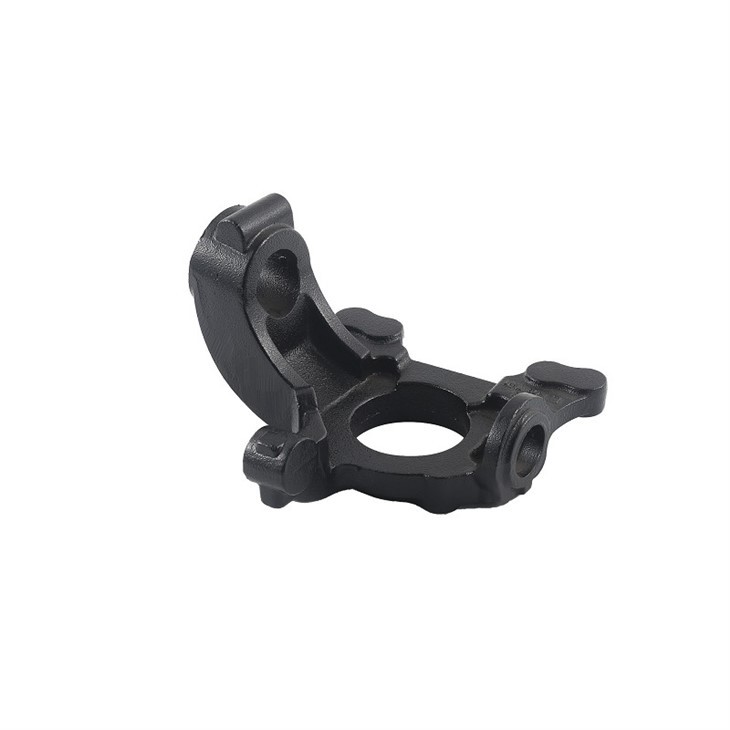
In addition to brake hubs casting, we also offer a wide range of other automotive casting products. For example, our Steering Knuckle Castings are precision - engineered to provide optimal steering performance and durability. We also have a variety of Casting Car Parts that are essential for the proper functioning of different vehicle systems. You can learn more about our Brake Hubs Casting on our website.
Conclusion
In conclusion, vacuum plays an indispensable role in brake hubs casting. By removing gases, preventing oxide formation, and improving metal flow, vacuum helps to produce high - quality brake hubs with excellent mechanical properties and reliability. As a brake hubs casting supplier, we are committed to leveraging the latest vacuum casting technologies to meet the evolving needs of the automotive industry.
If you are in the market for high - quality brake hubs or other automotive casting products, we invite you to contact us for a procurement discussion. Our team of experts is ready to provide you with detailed information and customized solutions to meet your specific requirements.
References
- Campbell, J. (2003). Castings. Butterworth - Heinemann.
- Flemings, M. C. (1974). Solidification Processing. McGraw - Hill.
- Kou, S. (2003). Welding Metallurgy. Wiley.