

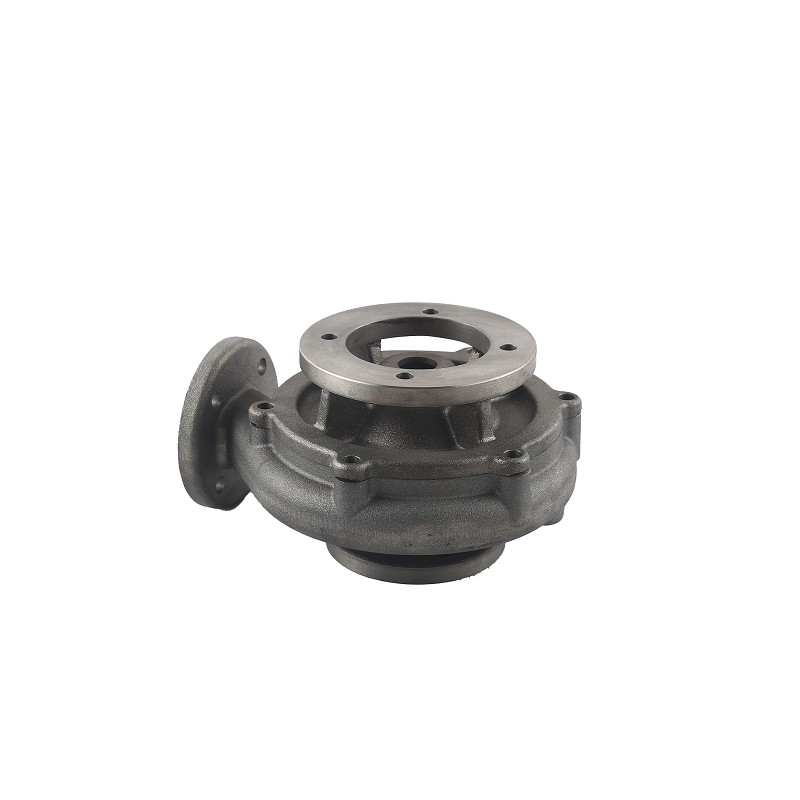
Hey there! I'm a supplier of pumpworks castings, and I've been in this industry for quite some time. One of the most crucial aspects of our business is detecting defects in pumpworks castings. It's not just about making sure the products look good; it's about ensuring they perform well and last a long time. In this blog, I'll share some tips on how to detect defects in pumpworks castings.
Visual Inspection
The first and easiest way to detect defects is through visual inspection. You don't need any fancy equipment for this; just your eyes and a good light source. Start by looking at the surface of the casting. Check for any cracks, holes, or rough spots. Cracks can be a sign of stress during the casting process or poor material quality. Holes might indicate porosity, which can weaken the casting. Rough spots could be due to improper mold preparation or problems with the pouring process.
For example, if you're looking at an Astm A48 Cl 30 casting, you want to make sure the surface is smooth and free of any visible defects. A rough or pitted surface can affect the performance of the pump, especially if it's in contact with fluids. Also, look for any signs of misalignment or warping. If the casting isn't properly aligned, it can cause problems when it's installed in the pump.
Dimensional Inspection
Next up is dimensional inspection. This is where you use tools like calipers, micrometers, and gauges to measure the casting and make sure it meets the required specifications. Every pumpworks casting has specific dimensions that it needs to adhere to. If the casting is too big or too small, it won't fit properly in the pump, which can lead to leaks, inefficiencies, and even breakdowns.
For instance, if you're dealing with a Cast Iron Gear, the teeth need to have the right size and shape. If the teeth are too wide or too narrow, the gear won't mesh properly with other components in the pump, causing it to malfunction. Make sure to measure all the critical dimensions and compare them to the design drawings. Any deviations could be a sign of a defect.
Non - Destructive Testing (NDT)
When visual and dimensional inspections aren't enough, non - destructive testing comes in handy. There are several NDT methods that can be used to detect internal defects in pumpworks castings.
Ultrasonic Testing
Ultrasonic testing uses high - frequency sound waves to detect flaws inside the casting. A transducer sends sound waves into the casting, and if there's a defect like a crack or a void, the sound waves will bounce back differently. By analyzing the echoes, technicians can determine the location and size of the defect. This method is great for detecting internal cracks that aren't visible on the surface.

Radiographic Testing
Radiographic testing, such as X - ray or gamma - ray testing, is another powerful NDT method. It works by passing radiation through the casting and onto a film or detector. Defects like porosity, inclusions, or internal cracks will show up as dark spots on the film. This method gives a clear picture of what's going on inside the casting, but it requires special equipment and trained operators.
Magnetic Particle Testing
Magnetic particle testing is used mainly for ferromagnetic materials. A magnetic field is applied to the casting, and if there's a surface or near - surface defect, the magnetic field will be disrupted. Iron particles are then applied to the surface, and they will accumulate at the site of the defect, making it visible. This method is quick and easy to use for detecting surface cracks in castings made of materials like iron and steel.
Material Analysis
It's also important to analyze the material of the pumpworks casting. The quality of the material can have a big impact on the performance and durability of the casting. There are different ways to analyze the material.
Chemical Analysis
Chemical analysis helps determine the composition of the material. This is important because the right chemical composition is necessary for the casting to have the desired properties. For example, if a casting is supposed to be made of a certain grade of steel, the chemical analysis can confirm if it has the correct amounts of elements like carbon, manganese, and chromium. You can use methods like spectroscopy to perform chemical analysis.
Hardness Testing
Hardness testing measures the resistance of the material to indentation. A proper hardness is crucial for pumpworks castings. If the material is too soft, it can wear out quickly. On the other hand, if it's too hard, it can be brittle and prone to cracking. There are different hardness testing methods, such as the Brinell, Rockwell, and Vickers tests. By performing hardness testing, you can ensure that the material has the right properties.
Quality Control in the Production Process
To reduce the chances of defects in pumpworks castings, it's essential to have a good quality control system in place during the production process.
Mold Design and Preparation
The mold plays a crucial role in the casting process. A well - designed mold will ensure that the casting has the right shape and dimensions. The mold needs to be properly prepared, with the right surface finish and no signs of damage. Any flaws in the mold can be transferred to the casting.
Pouring and Cooling
The pouring process is also critical. The molten metal needs to be poured at the right temperature and speed. If the temperature is too high, it can cause excessive shrinkage and porosity. If the pouring speed is too fast, it can lead to turbulence and air entrapment. After pouring, the cooling process needs to be carefully controlled. Uneven cooling can cause internal stresses and cracks in the casting.
Conclusion
Detecting defects in pumpworks castings is a multi - step process that involves visual inspection, dimensional inspection, non - destructive testing, and material analysis. By using these methods, we can ensure that the Pumpworks Castings we supply are of the highest quality.
If you're in the market for high - quality pumpworks castings, we'd love to have a chat with you. Whether you need Astm A48 Cl 30 castings or Cast Iron Gears, we've got you covered. Contact us to start a procurement discussion and see how we can meet your needs.
References
- ASNT Nondestructive Testing Handbook, Volume 1: Ultrasonic Testing
- ASTM International Standards on Castings
- ASM Handbook, Volume 15: Castings