

Hey there! As a brake hubs casting supplier, I've been deeply involved in the industry for quite some time. One of the key aspects that we always keep an eye on is the thermal conductivity of brake hubs casting. Why? Well, it's super important for the performance and safety of the braking system. In this blog, I'll walk you through the factors that can affect the thermal conductivity of brake hubs casting.
Material Composition
The material you use to make brake hubs is the first big factor. Different metals and alloys have different thermal conductivities. For example, cast iron is a common material for brake hubs. It has a relatively high thermal conductivity, which is good for dissipating heat quickly. Cast iron contains graphite flakes, and these flakes play a role in heat transfer. The more graphite there is, and the better its distribution, the higher the thermal conductivity can be.
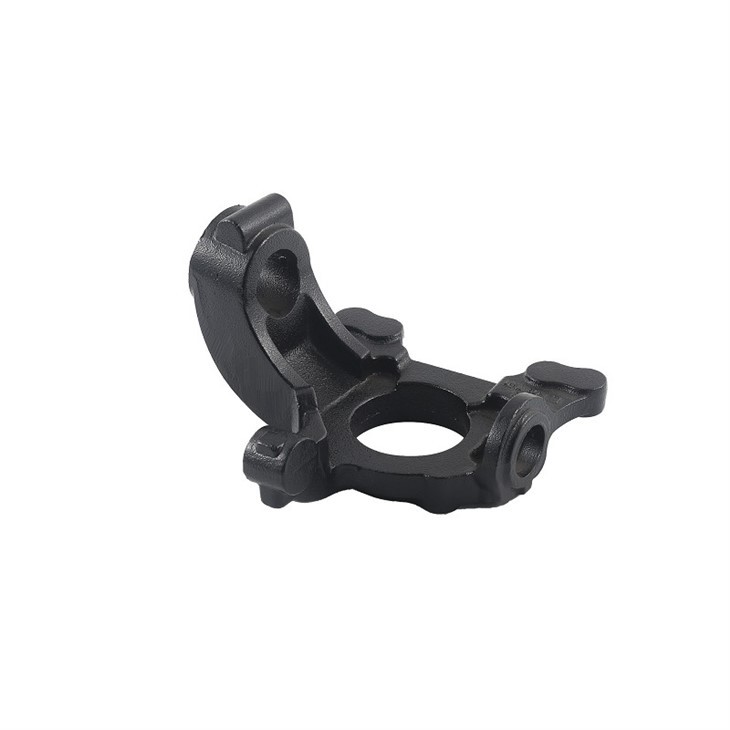
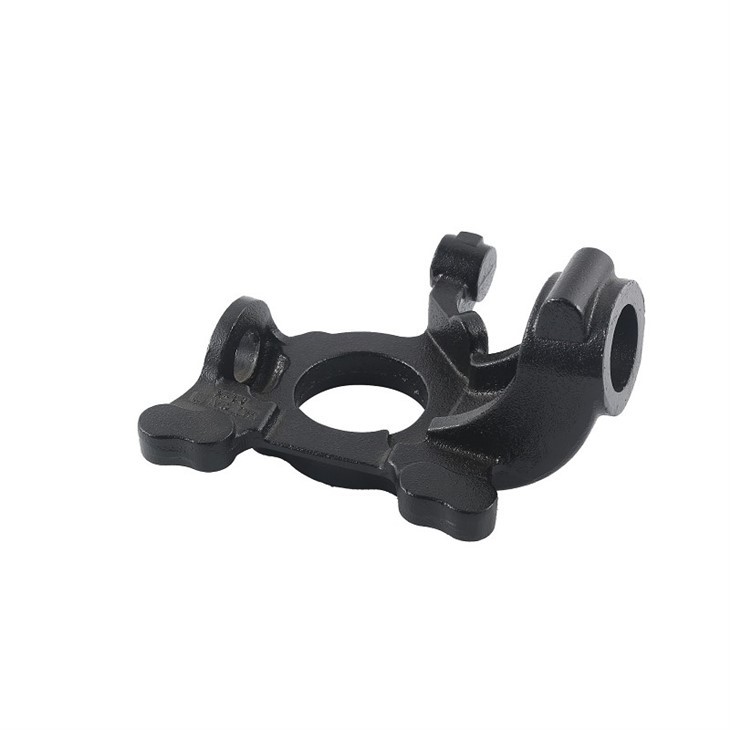
On the other hand, if you use some alloy steels, their thermal conductivity might be different. Alloying elements like chromium, nickel, and molybdenum can change the crystal structure of the metal. This change can either increase or decrease the thermal conductivity depending on how these elements interact with the base metal. For instance, adding a small amount of chromium can improve the corrosion resistance of the brake hub, but it might also slightly reduce the thermal conductivity.
Microstructure
The microstructure of the brake hub casting is another crucial factor. When the metal solidifies during the casting process, different microstructures can form. For example, in cast iron, you can have pearlite, ferrite, and graphite in different proportions. Pearlite has a different thermal conductivity compared to ferrite. If the microstructure has a fine and uniform distribution of phases, heat can transfer more easily.
In some cases, casting defects like porosity can also affect the thermal conductivity. Porosity means there are small holes or voids in the casting. These voids act as barriers to heat transfer because heat has to find a way around them. So, a casting with high porosity will have lower thermal conductivity than a dense, defect - free one.
Manufacturing Process
The way we make the brake hubs can have a huge impact on their thermal conductivity. The casting process itself, whether it's sand casting, investment casting, or die casting, can influence the microstructure and density of the final product.
In sand casting, the cooling rate is relatively slow. This slow cooling can lead to a coarser microstructure, which might affect the thermal conductivity. On the other hand, die casting has a much faster cooling rate. A fast cooling rate can result in a finer microstructure, which generally promotes better heat transfer.
Heat treatment is another part of the manufacturing process that matters. Annealing, for example, can relieve internal stresses in the casting and change the microstructure. If done correctly, annealing can improve the thermal conductivity by making the crystal structure more regular. Quenching, on the contrary, can create a more complex microstructure with high internal stresses. This might reduce the thermal conductivity.
Surface Finish
The surface finish of the brake hub also plays a role in thermal conductivity. A smooth surface allows for better contact with other components in the braking system, like brake pads. When there is good contact, heat can transfer more efficiently from the brake pads to the brake hub.
If the surface is rough, there will be less contact area between the brake pad and the hub. This reduced contact area creates a thermal resistance, making it harder for heat to flow. Additionally, a rough surface can trap air, and air is a poor conductor of heat. So, having a proper surface finish, whether it's through machining or polishing, is essential for maintaining good thermal conductivity.
Environmental Factors
The environment in which the brake hub operates can affect its thermal conductivity. Temperature is an obvious one. As the temperature increases, the thermal conductivity of most metals changes. In general, for metals, the thermal conductivity decreases as the temperature rises. This is because at higher temperatures, the atoms in the metal vibrate more vigorously, which can interfere with the flow of heat.
Humidity can also have an impact, especially if the brake hub is made of a metal that is prone to corrosion. Corrosion can form a layer on the surface of the brake hub. This layer can act as an insulator, reducing the thermal conductivity. So, in a humid environment, it's important to use corrosion - resistant materials or apply protective coatings to the brake hubs.
Applications and Related Products
When it comes to brake hubs, they are often used in automotive applications. If you're interested in other casting products for the automotive industry, check out Casting Car Parts. There are also Polaris ATV Castings and Steering Knuckle Castings that are relevant to the field. These products might have different requirements for thermal conductivity depending on their specific functions.
In conclusion, there are multiple factors that can affect the thermal conductivity of brake hubs casting. As a supplier, we need to carefully control all these factors to ensure that our brake hubs perform well in terms of heat dissipation. If you're in the market for high - quality brake hubs or have any questions about their thermal conductivity, feel free to reach out. We're always here to discuss your needs and find the best solutions for you.
References
- Callister, W. D., & Rethwisch, D. G. (2016). Materials Science and Engineering: An Introduction. Wiley.
- ASM Handbook Committee. (2008). ASM Handbook, Volume 15: Casting. ASM International.