

As a supplier of casting car parts, I've witnessed firsthand the profound influence of alloy composition on the casting properties of these essential components. In the automotive industry, where precision, durability, and performance are non - negotiable, understanding this relationship is crucial.
1. Fundamentals of Alloy Composition in Car Part Casting
Alloys are mixtures of two or more metals, often combined with non - metallic elements, to achieve specific properties. In the context of car part casting, different alloy compositions are selected based on the requirements of the final part. For example, iron - based alloys are commonly used due to their high strength and relatively low cost. Steel, an alloy of iron and carbon, comes in various grades depending on the carbon content and the presence of other alloying elements such as manganese, chromium, and nickel.
Aluminum alloys are also popular in car part casting, especially for parts where weight reduction is a priority. They offer good corrosion resistance, high thermal conductivity, and excellent machinability. Magnesium alloys, although less common, are used in some high - performance applications because of their extremely low density and good strength - to - weight ratio.
2. Impact on Castability
The castability of an alloy refers to its ability to be formed into a desired shape during the casting process. One of the key factors affected by alloy composition is the fluidity of the molten metal. Fluidity determines how well the alloy can fill the mold cavity, which is essential for producing parts with complex geometries.
For instance, in the casting of Truck Automatic Adjustment Arm Casting, a well - designed alloy with good fluidity is required to ensure that all the intricate features of the arm are accurately replicated in the casting. Alloys with a lower melting point and fewer inclusions tend to have better fluidity. Adding elements like silicon to aluminum alloys can improve fluidity by reducing the surface tension of the molten metal.
Another aspect of castability is the shrinkage behavior of the alloy. During solidification, alloys undergo shrinkage, which can lead to defects such as porosity and cracks if not properly managed. The composition of the alloy plays a significant role in determining the amount and type of shrinkage. For example, some alloying elements can change the solidification range of the alloy, which in turn affects the shrinkage characteristics. In the case of differential housing castings, Differential Housing Castings, precise control of shrinkage is crucial to ensure the dimensional accuracy of the housing.
3. Mechanical Properties
The mechanical properties of car parts are directly related to the alloy composition. Strength is one of the most important mechanical properties, as car parts need to withstand various loads and stresses during operation. Different alloying elements can enhance the strength of the alloy in different ways.
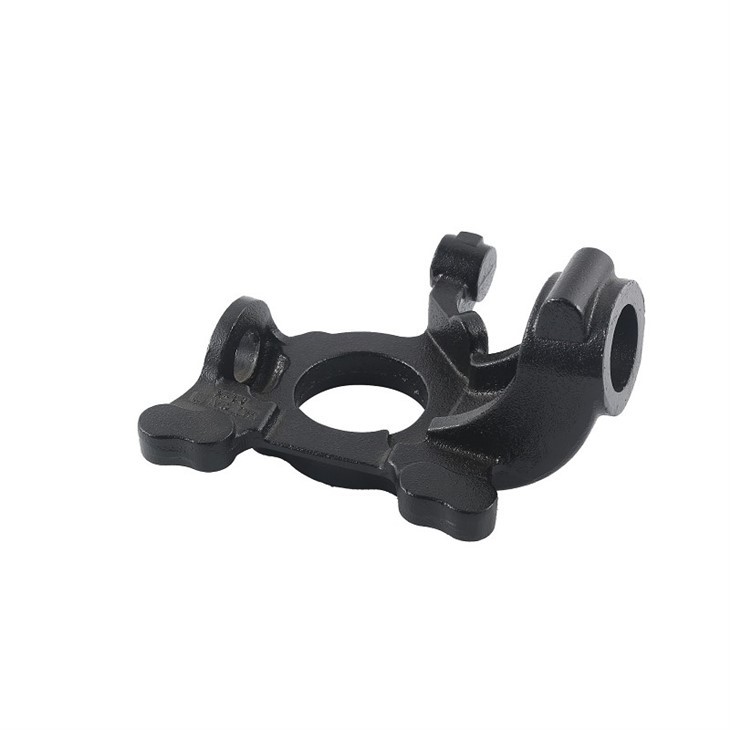
For example, adding chromium to steel can increase its hardness and wear resistance, making it suitable for parts like steering knuckles. Steering Knuckle Castings require high strength and good fatigue resistance to ensure safe and reliable steering performance. Manganese is another common alloying element in steel that improves strength by forming solid solutions and increasing the hardenability of the steel.
Ductility is also an important mechanical property, especially for parts that need to deform plastically without fracturing. Alloy composition can be adjusted to optimize the balance between strength and ductility. For example, in some aluminum alloys, the addition of copper can increase strength but may reduce ductility. By carefully controlling the copper content and adding other elements such as magnesium, a good balance between strength and ductility can be achieved.

4. Corrosion Resistance
Car parts are often exposed to harsh environments, including moisture, road salt, and chemicals. Therefore, corrosion resistance is a critical property. The alloy composition has a significant impact on the corrosion resistance of the casting.
Stainless steel, which contains a high percentage of chromium, is well - known for its excellent corrosion resistance. The chromium forms a passive oxide layer on the surface of the steel, which protects it from further corrosion. In aluminum alloys, the addition of elements like magnesium and zinc can improve corrosion resistance by forming a protective oxide film on the surface.
For parts like the differential housing, which may be exposed to water and contaminants, choosing an alloy with good corrosion resistance is essential to ensure a long service life. By carefully selecting the alloy composition, we can produce parts that can withstand the corrosive effects of the environment and maintain their performance over time.
5. Thermal Properties
Thermal properties, such as thermal conductivity and thermal expansion, are also affected by alloy composition. Thermal conductivity is important for parts that need to dissipate heat, such as engine components. Aluminum alloys, with their high thermal conductivity, are often used in engine parts to help transfer heat away from critical areas.
Thermal expansion can cause problems if not properly accounted for. Different alloys have different coefficients of thermal expansion, which can lead to dimensional changes and stress buildup when the part is subjected to temperature variations. In the design of car parts, the alloy composition is selected to ensure that the thermal expansion characteristics are compatible with the operating conditions.
6. Cost Considerations
In addition to the technical properties, cost is also an important factor in the selection of alloy composition. Some alloying elements, such as nickel and cobalt, are relatively expensive. Therefore, a balance needs to be struck between achieving the desired properties and keeping the cost of production under control.
For example, in some applications, we may choose to use a lower - cost alloy with slightly inferior properties and then apply surface treatments to improve its performance. This approach can help reduce the overall cost of the casting while still meeting the requirements of the application.
Conclusion
In conclusion, the alloy composition has a far - reaching impact on the casting properties of car parts. From castability and mechanical properties to corrosion resistance and thermal properties, every aspect of the part's performance is influenced by the choice of alloy. As a casting car parts supplier, we understand the importance of carefully selecting the alloy composition to meet the specific requirements of each part.
If you are in the market for high - quality casting car parts, we are here to provide you with the best solutions. Our team of experts can work with you to select the most suitable alloy composition for your application, ensuring that you get parts that meet or exceed your expectations. Contact us today to start a discussion about your procurement needs and explore how we can help you achieve your goals in the automotive industry.
References
- Davis, J. R. (Ed.). (2001). Aluminum and Aluminum Alloys. ASM International.
- Llewellyn, D. T., & Atkinson, H. V. (2010). Physical Metallurgy Principles. Springer.
- ASM Handbook Committee. (2008). ASM Handbook Volume 15: Casting. ASM International.