

Hey there! As a supplier of pump casting parts, I've been deeply involved in the manufacturing process, and today I wanna chat about the role of risers in pump casting parts manufacturing.
First off, let's understand what risers are. In simple terms, a riser is an extra void in the mold that's filled with molten metal. It acts as a reservoir, providing additional metal to the casting as it solidifies and shrinks. This is crucial in pump casting parts manufacturing because pump parts need to be of high quality and precision. Any defects like shrinkage cavities can compromise the performance of the pump.
One of the main functions of risers is to compensate for shrinkage. When molten metal cools and solidifies, it shrinks in volume. If there's no extra supply of metal, this shrinkage can lead to internal voids or porosity in the casting. For pump parts, this is a big no - no. Imagine a Cf8m Pump with internal voids. It could cause leaks, reduced efficiency, and even complete failure of the pump. Risers ensure that as the metal in the casting solidifies and shrinks, they can supply more molten metal to fill those gaps, resulting in a dense and defect - free casting.
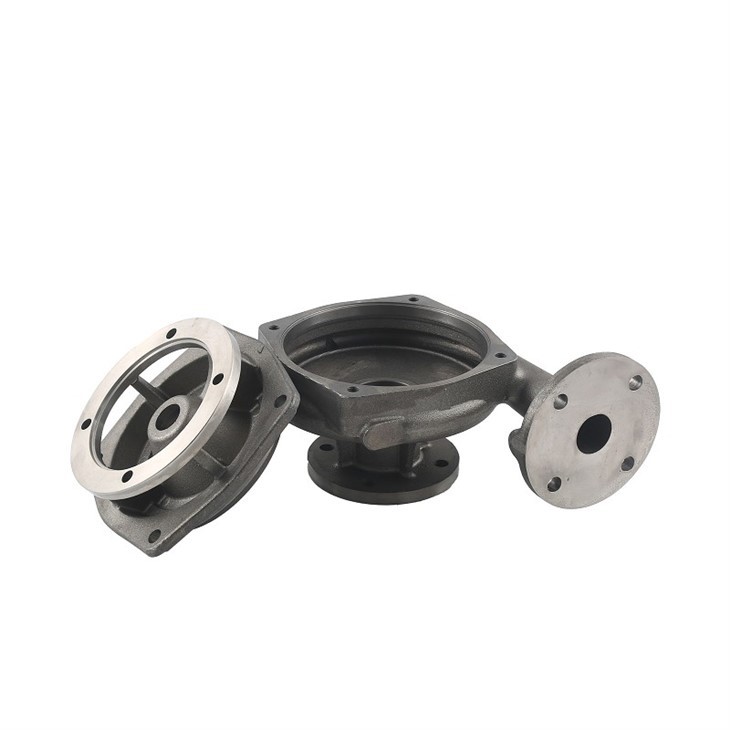
Another important role of risers is to help with directional solidification. In pump casting parts manufacturing, we want the metal to solidify in a specific direction, usually from the farthest point from the riser towards the riser itself. This way, any shrinkage is directed towards the riser, which can then supply the necessary metal. By controlling the solidification direction, we can minimize the formation of internal defects. For example, in Pump Cover Castings, proper directional solidification ensures that the cover has a uniform structure and strength, which is essential for its function of protecting the internal components of the pump.
Risers also play a role in removing impurities. During the casting process, impurities in the molten metal tend to float to the top. Since risers are located at the top of the mold in many cases, these impurities can be trapped in the riser. This helps in getting a cleaner and purer casting. For pump parts, which often operate in harsh environments and need to be durable, having a casting free of impurities is vital. A Cast Iron Gear with impurities could wear out quickly or cause jams in the pump mechanism.
Now, let's talk about how we design risers for pump casting parts. The size, shape, and location of the riser are all carefully considered. The size of the riser depends on the volume of the casting and the amount of shrinkage expected. A larger casting will generally require a larger riser to supply enough metal. The shape of the riser can also affect its performance. Common shapes include cylindrical, spherical, and rectangular. Each shape has its own advantages in terms of heat transfer and metal flow. For example, a spherical riser has a small surface - area - to - volume ratio, which means it cools more slowly and can supply metal for a longer time.
The location of the riser is crucial for ensuring proper metal flow and directional solidification. It needs to be placed in a position where it can easily supply metal to the areas of the casting that are most likely to experience shrinkage. This often requires a good understanding of the geometry of the pump part and the solidification behavior of the metal.
In the manufacturing process, we also need to take into account the cost and efficiency of using risers. While risers are essential for producing high - quality pump casting parts, they also add to the cost of production. The extra metal used in the riser needs to be removed after casting, which takes time and resources. So, we need to find a balance between using enough risers to ensure quality and minimizing the amount of excess metal.
We use advanced simulation software to optimize the design of risers. These software programs can predict the solidification process, the flow of molten metal, and the formation of defects. By using simulation, we can make adjustments to the riser design before actually making the mold, saving time and money.
In conclusion, risers play a vital role in pump casting parts manufacturing. They help in compensating for shrinkage, ensuring directional solidification, removing impurities, and ultimately producing high - quality pump parts. As a supplier of pump casting parts, we understand the importance of getting the riser design right. If you're in the market for high - quality pump casting parts, we'd love to have a chat with you. Whether you need Cf8m Pump, Pump Cover Castings, or Cast Iron Gear, we have the expertise and experience to meet your needs. Reach out to us for a quote and let's start a great partnership in the world of pump casting parts!
References:

- "Foundry Technology" by John Campbell
- "Casting: Design, Performance, and Process Control" by R. Pehlke