

As a dedicated supplier of automotive castings, I've witnessed firsthand the critical role that mold temperature plays in determining the quality of the final products. In the automotive industry, where precision and reliability are non - negotiable, understanding the impacts of mold temperature on casting quality is of utmost importance.
The Basics of Mold Temperature in Automotive Castings
Before delving into the impacts, it's essential to understand what mold temperature is and how it is controlled. Mold temperature refers to the temperature of the mold cavity during the casting process. In automotive casting, various methods are employed to control this temperature, such as heating or cooling systems integrated into the mold. These systems can use water, oil, or even electrical heating elements to maintain the desired temperature range.
The initial mold temperature can significantly affect the solidification process of the molten metal. When the molten metal is poured into the mold, it starts to lose heat to the cooler mold walls. The rate of heat transfer is directly related to the temperature difference between the molten metal and the mold. A lower mold temperature generally leads to a faster cooling rate, while a higher mold temperature results in a slower cooling rate.
Impact on Dimensional Accuracy
One of the primary concerns in automotive castings is dimensional accuracy. Castings need to meet strict tolerances to ensure proper fit and function in the vehicle. Mold temperature has a direct impact on dimensional accuracy.
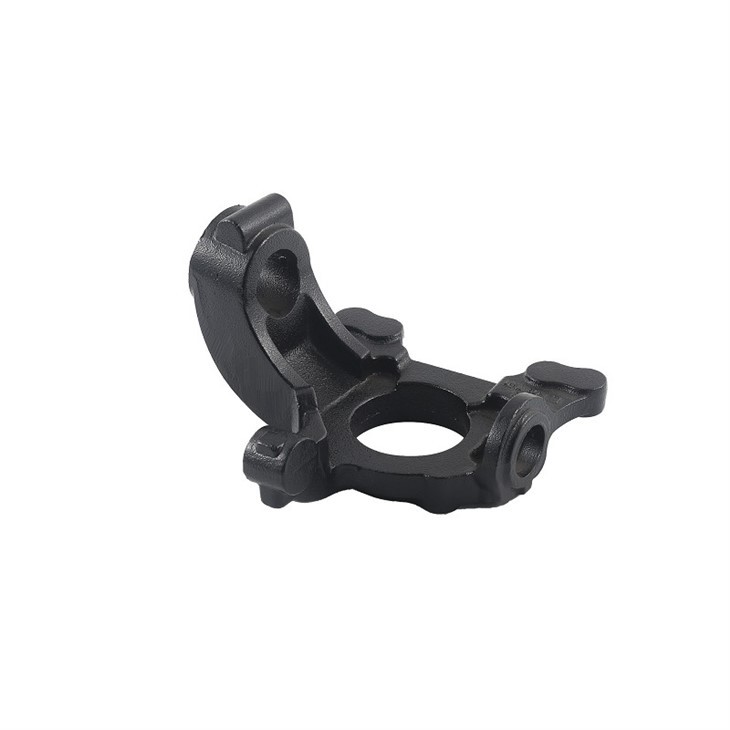
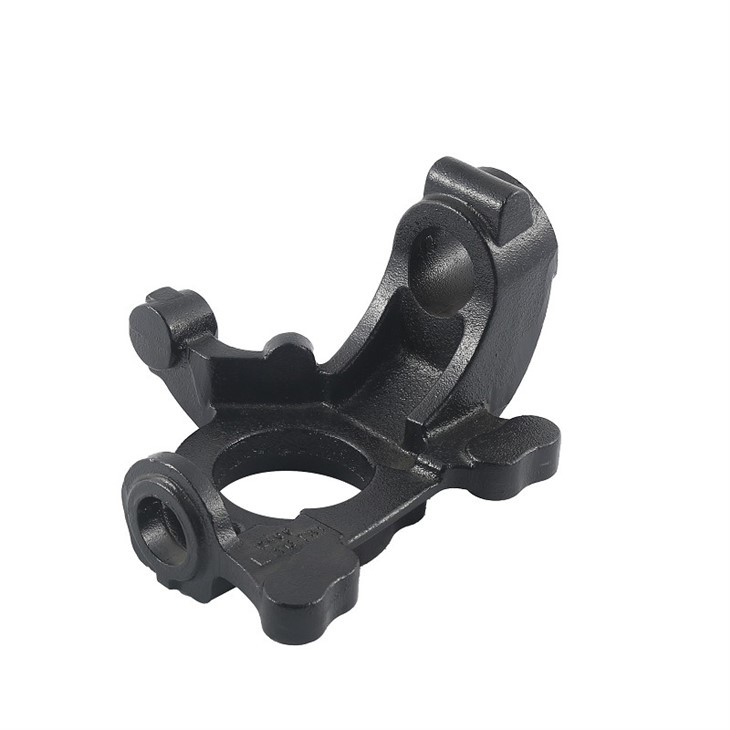
When the mold temperature is too low, the molten metal solidifies rapidly. This rapid solidification can cause uneven shrinkage within the casting. As the outer layers of the casting solidify first, they form a rigid shell. The inner layers, which are still molten, continue to shrink as they cool. If the cooling is too fast, this internal shrinkage can lead to internal stresses and distortion of the casting. For example, in Steering Knuckle Castings, which require high precision for proper steering function, improper mold temperature can result in parts that do not fit correctly into the steering system, leading to potential safety hazards.
On the other hand, if the mold temperature is too high, the casting cools slowly. This slow cooling can cause the grains in the metal to grow larger, which can lead to a decrease in mechanical properties and an increase in the risk of dimensional changes due to post - casting processes such as machining. A well - controlled mold temperature ensures that the casting solidifies uniformly, minimizing shrinkage and distortion and maintaining the desired dimensions.
Influence on Surface Finish
The surface finish of automotive castings is another crucial aspect. A smooth surface finish is not only aesthetically pleasing but also important for functional reasons. For example, in Brake Hubs Casting, a smooth surface is necessary for proper brake pad contact and efficient braking performance.
Mold temperature affects the surface finish in several ways. At low mold temperatures, the rapid solidification can cause the molten metal to solidify before it can fully fill the mold cavity, resulting in a rough surface with voids and porosity. These surface defects can reduce the fatigue life of the casting and affect its performance.
Conversely, high mold temperatures can lead to a phenomenon called "hot tearing." As the casting cools slowly, the metal is more likely to develop cracks on the surface due to the internal stresses caused by uneven cooling. Maintaining an optimal mold temperature allows the molten metal to flow smoothly into the mold cavity and solidify evenly, resulting in a smooth and defect - free surface finish.
Effects on Mechanical Properties
The mechanical properties of automotive castings, such as strength, hardness, and ductility, are directly related to the microstructure of the metal. Mold temperature plays a significant role in determining the microstructure.
A lower mold temperature promotes a finer grain structure. Finer grains generally result in higher strength and hardness. However, if the cooling is too rapid, it can also lead to the formation of brittle phases in the metal, reducing ductility. For example, in Iron Wagon Brake Caliper Bracket Casting, which requires a combination of strength and ductility to withstand the forces during braking, an improper mold temperature can lead to a casting that is either too brittle or not strong enough.
Higher mold temperatures, on the other hand, lead to a coarser grain structure. Coarser grains can reduce the strength of the casting but may increase its ductility. By carefully controlling the mold temperature, we can achieve the desired balance of mechanical properties for each specific automotive casting application.
Impact on Porosity and Inclusions
Porosity and inclusions are common defects in automotive castings that can significantly affect their quality and performance. Mold temperature can influence the formation of these defects.
When the mold temperature is low, the molten metal may not have enough fluidity to fill the mold cavity completely. This can result in the entrapment of air or gases, leading to porosity in the casting. Porosity weakens the casting and can also provide a path for corrosion, reducing the service life of the part.
High mold temperatures can cause the mold materials to react with the molten metal, leading to the formation of inclusions. These inclusions can act as stress concentrators, reducing the mechanical properties of the casting. By maintaining an appropriate mold temperature, we can ensure that the molten metal has sufficient fluidity to fill the mold cavity without causing excessive reactions with the mold materials, minimizing the formation of porosity and inclusions.
Importance of Mold Temperature Control in Production
In a production environment, consistent mold temperature control is essential for producing high - quality automotive castings. Variations in mold temperature from one casting to another can lead to inconsistent quality, which is unacceptable in the automotive industry.
Automated temperature control systems are often used to monitor and adjust the mold temperature in real - time. These systems use sensors to measure the temperature at various points in the mold and adjust the heating or cooling systems accordingly. By maintaining a stable mold temperature throughout the casting process, we can ensure that each casting meets the required quality standards.
Conclusion and Call to Action
In conclusion, mold temperature has a profound impact on the quality of automotive castings. It affects dimensional accuracy, surface finish, mechanical properties, and the formation of defects such as porosity and inclusions. As an automotive castings supplier, we understand the critical importance of controlling mold temperature to produce high - quality parts.
If you are in the automotive industry and are looking for reliable automotive castings, we invite you to contact us for procurement discussions. Our team of experts is ready to work with you to understand your specific requirements and provide the best casting solutions.
References
- Campbell, J. (2003). Castings. Butterworth - Heinemann.
- Davis, J. R. (1993). Aluminum and Aluminum Alloys. ASM International.
- Kalpakjian, S., & Schmid, S. R. (2009). Manufacturing Engineering and Technology. Pearson.