

Hey there! As a pump casting supplier, I've been dealing with all sorts of pump casting products like Submersible Pump Casting Parts and Pump Impeller Casting. One of the most common issues we face in the pump casting industry is the shrinkage rate of pump castings. It can be a real headache, but understanding the factors affecting it can help us manage and control this problem better. So, let's dive into what these factors are.
Metal Alloy Composition
The type of metal alloy used in pump casting plays a huge role in the shrinkage rate. Different metals have different thermal properties, which means they expand and contract at different rates when heated and cooled. For example, some alloys with a high percentage of certain elements might shrink more than others.
Let's take iron-based alloys as an example. Cast iron, which is commonly used in pump casting, has a relatively high carbon content. During the solidification process, the carbon in the cast iron can form graphite, which has a different density compared to the iron matrix. This change in density can cause the casting to shrink as it cools. On the other hand, some aluminum alloys used in Submersible Pump Casting Parts might have a lower shrinkage rate due to their unique alloying elements and crystal structures.
The composition of the alloy also affects the solidification behavior. Alloys with a wide freezing range tend to have a more complex solidification process, which can lead to uneven shrinkage. This is because the liquid and solid phases coexist over a larger temperature range, and the movement of the liquid phase during solidification can cause local variations in density and shrinkage.
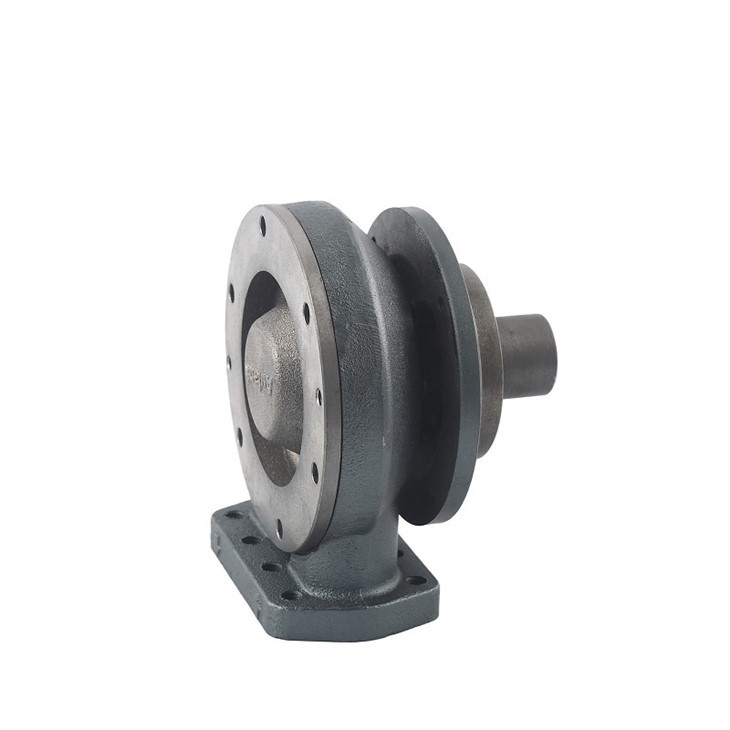

Casting Design
The design of the pump casting itself is another important factor. The shape, size, and thickness of the casting can all influence the shrinkage rate.
Complex shapes with sharp corners and thin sections can cause problems. Sharp corners can act as stress concentration points, which can lead to cracking during the shrinkage process. Thin sections cool faster than thicker ones, which can result in uneven shrinkage and distortion. For instance, in a Pump Impeller Casting, the blades are often thin compared to the hub. If the design doesn't take into account the different cooling rates of these parts, it can lead to significant shrinkage differences and potential defects.
The size of the casting also matters. Larger castings generally have a higher shrinkage rate because they take longer to cool. The longer cooling time allows for more time for the metal to contract, and the heat transfer within the casting can be more uneven. Additionally, the mass of the casting can affect the internal stresses during shrinkage. A large, heavy casting may have more internal stresses due to its own weight, which can further complicate the shrinkage process.
Molding Material and Process
The molding material used in pump casting has a direct impact on the shrinkage rate. Different molding materials have different thermal conductivities, which affect how quickly the casting cools.
Sand molds are commonly used in pump casting. The type of sand, its grain size, and the binder used can all influence the heat transfer rate. For example, fine-grained sand has a higher thermal conductivity than coarse-grained sand, which means it can cool the casting faster. However, a very fast cooling rate can sometimes lead to higher internal stresses and increased shrinkage.
The molding process also plays a role. In some casting processes, like investment casting, the pattern used to create the mold can have an impact on the shrinkage. The wax patterns used in investment casting can shrink slightly during the heating and melting process, which can then affect the final dimensions of the casting.
Pouring Temperature and Rate
The temperature at which the molten metal is poured into the mold and the rate at which it is poured are crucial factors.
A high pouring temperature can increase the shrinkage rate. When the molten metal is at a high temperature, it has more thermal energy, and as it cools, it will contract more. Additionally, a high pouring temperature can cause more gas to be trapped in the casting, which can lead to porosity and uneven shrinkage.
The pouring rate also matters. If the molten metal is poured too quickly, it can cause turbulence in the mold, which can result in uneven filling and cooling. This can lead to variations in the shrinkage rate across the casting. On the other hand, pouring too slowly can cause the metal to start solidifying before the mold is completely filled, which can also lead to defects and uneven shrinkage.
Cooling Conditions
The way the casting cools after pouring is a major factor in determining the shrinkage rate.
Controlled cooling can help reduce shrinkage and improve the quality of the casting. For example, using a cooling medium like water or air can be adjusted to control the cooling rate. However, if the cooling is too rapid, it can cause high internal stresses, which can lead to cracking and increased shrinkage.
The environment in which the casting cools also matters. If the casting is exposed to a draft or uneven temperature distribution, it can cause uneven cooling and shrinkage. For instance, if one side of the casting is in contact with a cold surface while the other side is exposed to warm air, the side in contact with the cold surface will cool faster and shrink more, leading to distortion.
Heat Treatment
Heat treatment is often used to improve the mechanical properties of pump castings, but it can also affect the shrinkage rate.
During heat treatment, the casting is heated to a specific temperature and then cooled at a controlled rate. This process can cause the metal to undergo phase changes, which can result in dimensional changes. For example, some heat treatment processes can cause the metal to expand slightly during heating and then contract during cooling. If the heat treatment process is not carefully controlled, it can lead to excessive shrinkage or distortion.
Conclusion
As you can see, there are many factors that affect the shrinkage rate of pump castings. From the metal alloy composition to the heat treatment process, each step in the casting process plays a role. As a pump casting supplier, we need to carefully consider all these factors to ensure the quality and dimensional accuracy of our products, whether it's Submersible Pump Casting Parts or Pump Impeller Casting.
If you're in the market for high-quality pump casting products and want to discuss how we can manage the shrinkage rate to meet your specific requirements, feel free to reach out to us for a procurement discussion. We're always happy to help and work together to find the best solutions for your needs.
References
- Campbell, J. (2003). Castings. Butterworth-Heinemann.
- Flemings, M. C. (1974). Solidification Processing. McGraw-Hill.
- Kalpakjian, S., & Schmid, S. R. (2013). Manufacturing Engineering and Technology. Pearson.