

Porosity in pump casting is a common defect that can significantly compromise the quality and performance of pump components. As a seasoned pump casting supplier, I've witnessed firsthand the challenges that porosity presents and have developed effective strategies to prevent it. In this blog, I'll share these insights to help you achieve high - quality pump castings.
Understanding Porosity in Pump Casting
Porosity refers to the presence of small holes or voids within the cast metal. These voids can occur due to various reasons and can have a detrimental impact on the mechanical properties of the pump parts. There are mainly three types of porosity: gas porosity, shrinkage porosity, and microporosity.
Gas porosity is caused by the entrapment of gases during the casting process. When the molten metal solidifies, gases such as hydrogen, nitrogen, or oxygen that are dissolved in the metal can form bubbles. These bubbles are then trapped in the solidified metal, creating pores. Shrinkage porosity, on the other hand, occurs as a result of the volume reduction that takes place when the molten metal solidifies. If the metal does not have sufficient liquid metal to compensate for this shrinkage, voids are formed. Microporosity is characterized by very small pores that are often difficult to detect and can be related to the solidification structure of the metal.
Factors Contributing to Porosity
Several factors can contribute to the formation of porosity in pump casting.
1. Metal Quality
The quality of the raw metal used in casting is crucial. Impurities in the metal can act as nucleation sites for gas bubbles or can affect the solidification behavior of the metal, leading to porosity. For example, high levels of sulfur in cast iron can increase the likelihood of gas porosity.
2. Melting and Pouring Process
The melting process is a critical stage. If the metal is not melted properly, it may contain undissolved elements or trapped gases. Overheating the metal can also cause excessive oxidation, which can introduce more impurities and gases. During pouring, the speed and turbulence of the molten metal can have a significant impact. A high - speed pour with excessive turbulence can entrain air into the mold cavity, leading to gas porosity.
3. Mold Design and Materials
The design of the mold plays a vital role in preventing porosity. A poorly designed gating and riser system may not allow for proper filling and feeding of the molten metal, resulting in shrinkage porosity. The mold materials also matter. If the mold has a high gas permeability, it can help to release the gases generated during the casting process, reducing the risk of gas porosity.
4. Solidification Conditions
The rate of solidification affects the formation of porosity. A slow solidification rate can allow gases to escape more easily, but it may also increase the risk of shrinkage porosity. On the other hand, a very fast solidification rate can trap gases and lead to microporosity.
Preventive Measures
1. Metal Preparation
- Quality Control of Raw Materials: Source high - quality metals from reliable suppliers. Conduct thorough material testing before use to ensure that the metal meets the required specifications. For example, analyze the chemical composition of the metal to check for impurities.
- Melting Practices: Use proper melting techniques to minimize the introduction of gases and impurities. For instance, use a vacuum melting furnace if possible, as it can significantly reduce the gas content in the molten metal. Stir the molten metal gently to ensure uniform temperature and composition.
2. Pouring Optimization
- Pouring Speed and Angle: Control the pouring speed to avoid excessive turbulence. A slow and steady pour is usually preferred. Adjust the pouring angle to ensure that the molten metal fills the mold cavity smoothly without entraining air.
- Degassing: Degas the molten metal before pouring to remove dissolved gases. This can be achieved by adding degassing agents or using a degassing process such as rotary degassing.
3. Mold Design and Manufacturing

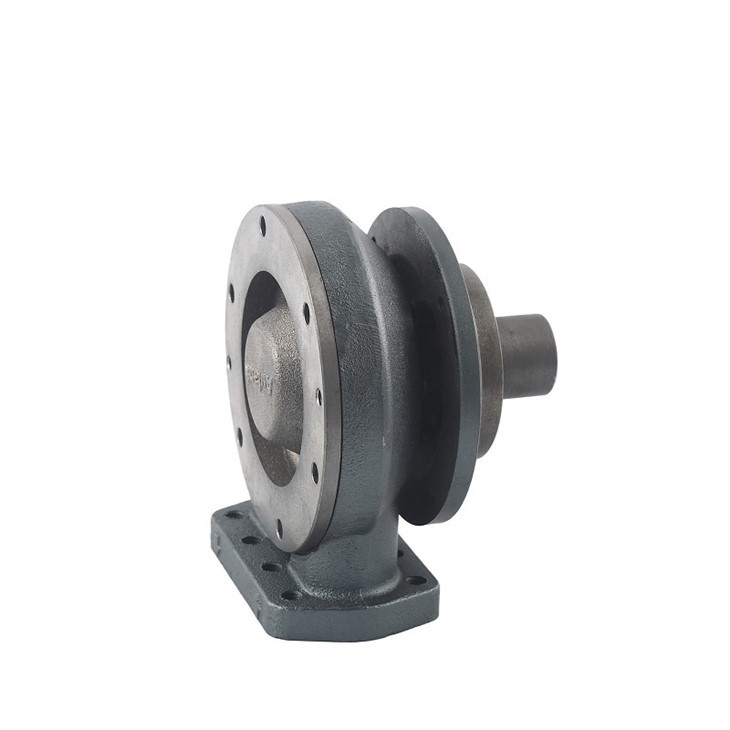
- Gating and Riser System Design: Design an efficient gating and riser system that allows for proper filling and feeding of the molten metal. The gating system should direct the molten metal into the mold cavity in a controlled manner, while the risers should provide a reservoir of molten metal to compensate for shrinkage.
- Mold Materials and Coating: Choose mold materials with appropriate gas permeability. Apply a suitable mold coating that can help to reduce friction between the molten metal and the mold, as well as prevent the formation of gas porosity.
4. Solidification Control
- Cooling Rate Management: Control the cooling rate of the casting to optimize the solidification process. This can be achieved by using cooling channels in the mold or by adjusting the ambient temperature around the mold. A controlled cooling rate can help to reduce both shrinkage and gas porosity.
Case Studies
In one of our projects, we were casting Submersible Pump Casting Parts for a client. Initially, we noticed a high rate of porosity in the castings, which affected the performance of the submersible pumps. After a detailed analysis, we found that the problem was mainly due to the pouring process and the gating system design.
We adjusted the pouring speed to a more appropriate level and redesigned the gating system to ensure better filling of the mold cavity. We also improved the degassing process during melting. As a result, the porosity rate was significantly reduced, and the quality of the Submersible Pump Casting Parts improved dramatically.
In another case, for Pumpworks Castings, we had issues with shrinkage porosity. By optimizing the riser design and adjusting the solidification conditions, we were able to eliminate the shrinkage porosity and deliver high - quality pump castings to our client.
The Importance of Preventing Porosity
Preventing porosity in pump casting is of utmost importance. Porous pump castings can lead to reduced mechanical strength, which may cause the pump to fail under normal operating conditions. It can also affect the corrosion resistance of the pump parts, as the pores can act as sites for corrosion initiation. In addition, porous castings may not meet the required dimensional accuracy, which can lead to problems during assembly and operation of the pump.
Conclusion
As a pump casting supplier, we understand the significance of delivering high - quality pump castings free from porosity. By carefully controlling the metal preparation, pouring process, mold design, and solidification conditions, we can effectively prevent porosity in pump casting.
If you are in the market for high - quality pump castings, we invite you to contact us for procurement and further discussions. We are committed to providing you with the best - in - class pump casting solutions that meet your specific requirements.
References
- Campbell, J. (2003). Castings. Butterworth - Heinemann.
- Flemings, M. C. (1974). Solidification Processing. McGraw - Hill.
- Pehlke, R. D. (1967). "The Role of Gases in Casting Defects." Transactions of the American Foundrymen's Society.