

In the ever - evolving landscape of automotive parts manufacturing, the question of whether 3D printing can be combined with casting has emerged as a topic of significant interest. As a long - standing supplier of casting car parts, I've witnessed firsthand the traditional strengths of casting and the rapid advancements in 3D printing technology. In this blog, I'll explore the potential of integrating these two manufacturing methods for car parts production.
The Basics of Casting in Car Parts Manufacturing
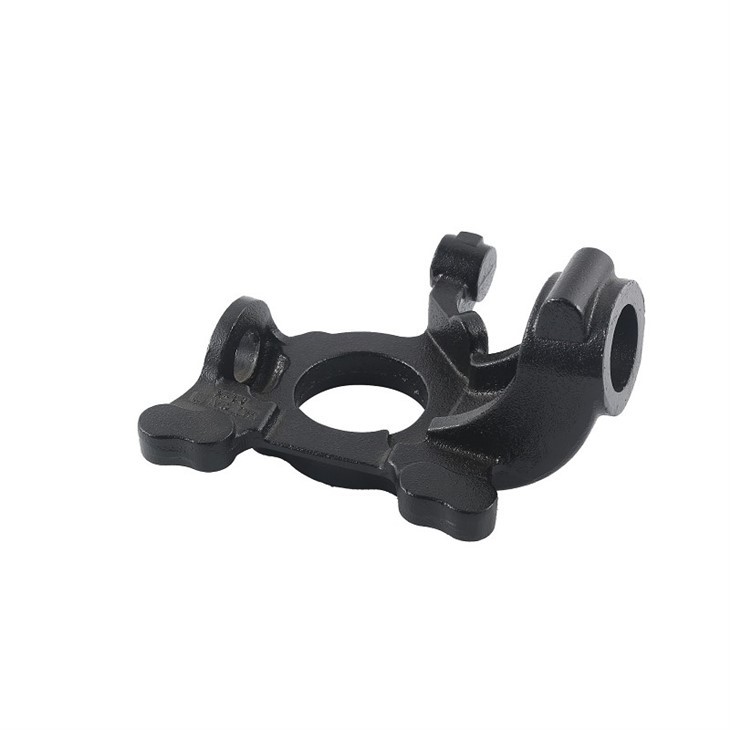
Casting has been a cornerstone of car parts manufacturing for decades. It involves pouring molten metal into a mold cavity, allowing it to solidify and take the shape of the desired part. This method is well - known for its ability to produce complex shapes with high precision and excellent mechanical properties. For example, Steering Knuckle Castings are critical components in a vehicle's steering system. The casting process can create steering knuckles with the necessary strength and durability to withstand the stresses of daily driving.
Another example is Beach Wheel Hub Castings. These parts need to be robust enough to support the weight of the vehicle and handle the forces during acceleration, braking, and cornering. Casting provides a cost - effective way to mass - produce such parts with consistent quality. Similarly, ATV Wheel Hub Castings require high - strength materials and precise geometries, which casting can efficiently deliver.
The Rise of 3D Printing in Manufacturing
3D printing, also known as additive manufacturing, has revolutionized the manufacturing industry in recent years. It works by building objects layer by layer from a digital model, using materials such as plastics, metals, and ceramics. One of the main advantages of 3D printing is its design flexibility. It allows for the creation of highly complex and customized parts that would be difficult or impossible to produce using traditional methods.
In the automotive industry, 3D printing has been used for prototyping new car parts. Designers can quickly print out a physical model of a part to test its fit, form, and function. This significantly reduces the time and cost associated with the design iteration process. Moreover, 3D printing enables on - demand production, which is particularly useful for low - volume or specialized parts.
Potential Benefits of Combining 3D Printing and Casting
Design Optimization
One of the most significant benefits of combining 3D printing and casting is the ability to optimize the design of car parts. 3D printing can be used to create intricate patterns and molds that are not achievable through traditional mold - making techniques. For example, a highly detailed internal cooling channel design for an engine component can be 3D printed as a pattern. This pattern can then be used in the casting process to create a part with enhanced performance.
Reduced Lead Time
The combination of these two methods can also reduce the lead time for part production. Instead of waiting for weeks or months to produce a mold using traditional machining methods, 3D printing can produce a mold in a matter of days. This allows for faster product development and quicker response to market demands.
Cost - Effective Production for Small Batches
For small - batch production, the combination of 3D printing and casting can be more cost - effective than using casting alone. Traditional casting often requires expensive tooling, which can be a significant barrier for small - scale production. 3D printing can produce molds at a lower cost, making it feasible to produce small quantities of high - quality cast parts.
Material Selection
3D printing and casting offer a wide range of material options. 3D printing can be used to print patterns or cores using materials that are compatible with the casting process. This allows for greater flexibility in material selection, enabling the production of parts with specific properties such as high strength, heat resistance, or corrosion resistance.
Challenges of Combining 3D Printing and Casting
Material Compatibility
One of the main challenges is ensuring the compatibility of the 3D - printed materials with the casting process. The 3D - printed pattern or mold must be able to withstand the high temperatures and pressures involved in casting without deforming or reacting with the molten metal.
Quality Control
Combining two different manufacturing processes also adds complexity to the quality control process. Ensuring the dimensional accuracy and mechanical properties of the final cast parts requires strict quality control measures at each stage of the production process.
Skill Requirements
The integration of 3D printing and casting requires a workforce with a diverse set of skills. Workers need to be proficient in both 3D printing technology and casting techniques, which may require additional training and education.
Real - World Applications and Case Studies
There have been several successful applications of combining 3D printing and casting in the automotive industry. For instance, some high - performance car manufacturers have used 3D - printed patterns to cast engine components with improved cooling efficiency. These components have shown better performance and durability compared to traditionally cast parts.
In addition, some custom car builders have used the combination of these two methods to produce unique and lightweight car parts. By 3D printing complex molds and then casting them, they can create parts that are both aesthetically pleasing and functionally superior.

Conclusion
The combination of 3D printing and casting holds great promise for car parts manufacturing. It offers numerous benefits, including design optimization, reduced lead time, cost - effective small - batch production, and greater material selection. However, it also faces challenges such as material compatibility, quality control, and skill requirements.
As a casting car parts supplier, I'm excited about the potential of this combination. It allows us to offer our customers more innovative and high - quality products. Whether you're looking for Steering Knuckle Castings, Beach Wheel Hub Castings, ATV Wheel Hub Castings, or other custom - made car parts, we're eager to explore the possibilities of combining 3D printing and casting with you. If you're interested in discussing your car parts requirements or exploring how this combined approach can benefit your project, please reach out to us. We're ready to engage in meaningful discussions and work together to bring your automotive parts ideas to life.
References
- Gibson, I., Rosen, D. W., & Stucker, B. (2015). Additive Manufacturing Technologies: 3D Printing, Rapid Prototyping, and Direct Digital Manufacturing. Springer.
- Campbell, I. H., & Green, N. R. (2012). Principles of Casting. Butterworth - Heinemann.
- Wohlers, T., & Gornet, P. (2017). Wohlers Report 2017: 3D Printing and Additive Manufacturing State of the Industry. Wohlers Associates.