

Hey there! As a supplier of ASTM A48 Cl 30, I often get asked about the heat treatment process for this material. So, I thought I'd take a moment to break it down for you in a way that's easy to understand.
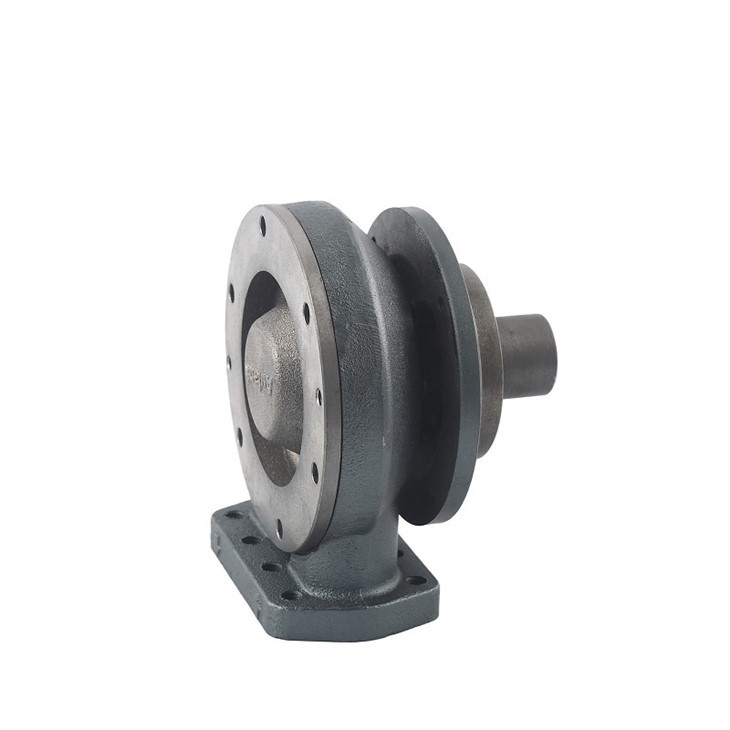
First off, let's talk a bit about ASTM A48 Cl 30. It's a gray cast iron, which is known for its good castability, wear resistance, and damping capacity. Gray cast iron gets its name from the gray color of its fracture surface, which is due to the graphite flakes present in its microstructure. ASTM A48 Cl 30 specifically has a minimum tensile strength of 30,000 psi, making it suitable for a variety of applications, including Submersible Pump Casting Parts, Cf8m Pump, and Pump Impeller Casting.
Now, let's dive into the heat treatment process. The main goals of heat treating ASTM A48 Cl 30 are to improve its mechanical properties, such as hardness, strength, and ductility, and to relieve internal stresses that may have been introduced during casting.
Annealing
The first step in the heat treatment process is often annealing. Annealing is a heat treatment process that involves heating the material to a specific temperature, holding it at that temperature for a certain period of time, and then slowly cooling it. For ASTM A48 Cl 30, the annealing temperature is typically around 1,400°F to 1,500°F (760°C to 815°C).
The purpose of annealing is to soften the material, improve its machinability, and relieve internal stresses. During annealing, the graphite flakes in the microstructure become more rounded and evenly distributed, which helps to reduce stress concentrations and improve the material's ductility.
After reaching the annealing temperature, the material is held at that temperature for a few hours to allow the internal structure to fully transform. The holding time depends on the size and thickness of the part. Thicker parts may require a longer holding time to ensure that the entire part reaches the desired temperature.
Once the holding time is complete, the material is slowly cooled. The cooling rate is crucial in annealing. A slow cooling rate allows the material to form a more stable and uniform microstructure. Usually, the material is cooled in the furnace at a rate of about 50°F to 100°F per hour (28°C to 56°C per hour) until it reaches room temperature.
Normalizing
Normalizing is another heat treatment process that can be used for ASTM A48 Cl 30. It involves heating the material to a temperature above the critical range, which for ASTM A48 Cl 30 is around 1,600°F to 1,700°F (870°C to 925°C).

The main difference between normalizing and annealing is the cooling rate. After reaching the normalizing temperature and holding it for a sufficient time to allow for proper grain growth and homogenization, the material is cooled in air. This faster cooling rate compared to annealing results in a finer grain structure and higher strength and hardness.
Normalizing is often used when a higher strength and hardness are required, but the part doesn't need to be as ductile as it would be after annealing. It can also help to refine the grain structure and improve the material's overall mechanical properties.
Hardening and Tempering
In some cases, ASTM A48 Cl 30 may undergo hardening and tempering processes. Hardening involves heating the material to a high temperature, usually above the critical range, and then rapidly quenching it in a cooling medium, such as oil or water.
However, gray cast iron like ASTM A48 Cl 30 doesn't respond to hardening as well as some other metals, such as steel. The graphite flakes in the microstructure act as stress concentrators and can cause cracking during quenching. So, hardening of ASTM A48 Cl 30 is not as common as annealing or normalizing.
If hardening is attempted, it's usually followed by tempering. Tempering is a process of reheating the hardened material to a lower temperature, typically between 300°F and 1,200°F (150°C and 650°C), and then cooling it slowly. The purpose of tempering is to relieve the internal stresses introduced during hardening and to improve the material's toughness and ductility while maintaining some of the hardness gained from hardening.
Effects of Heat Treatment on ASTM A48 Cl 30
The heat treatment process can have a significant impact on the properties of ASTM A48 Cl 30. Annealing can make the material softer and more machinable, which is great for parts that need to be easily cut or shaped. Normalizing can increase the strength and hardness, making the material more suitable for applications where higher mechanical properties are required.
Hardening and tempering, although less common, can provide a combination of hardness and toughness if done correctly. However, it's important to note that the success of these processes depends on many factors, including the size and shape of the part, the cooling rate, and the composition of the material.
Quality Control
As a supplier, we take quality control very seriously. We use advanced testing methods to ensure that the heat treatment process is carried out correctly and that the final product meets the required specifications. This includes non - destructive testing methods, such as ultrasonic testing, to detect any internal defects, and destructive testing methods, such as tensile testing and hardness testing, to verify the mechanical properties.
Conclusion
In conclusion, the heat treatment process for ASTM A48 Cl 30 is a crucial step in ensuring that the material meets the requirements of various applications. Whether it's annealing for improved machinability, normalizing for increased strength, or hardening and tempering for a combination of hardness and toughness, each process has its own advantages and limitations.
If you're in the market for ASTM A48 Cl 30 products, whether it's for Submersible Pump Casting Parts, Cf8m Pump, or Pump Impeller Casting, we're here to provide you with high - quality products that have been carefully heat - treated to meet your needs. Don't hesitate to reach out if you have any questions or if you're interested in discussing a potential purchase. We're always happy to help!
References
- ASM Handbook Volume 4: Heat Treating
- ASTM International standards for A48 Cl 30 gray cast iron