

ASTM A48 Cl 30 is a widely recognized grade of gray cast iron that finds extensive applications in various industries due to its excellent combination of mechanical properties and cost - effectiveness. As a trusted supplier of ASTM A48 Cl 30, I often receive inquiries about the grain size of this material. In this blog post, I will delve into the concept of grain size in ASTM A48 Cl 30, its significance, and how it impacts the performance of the castings.
Understanding Grain Size in Cast Iron
Grain size refers to the average size of the individual crystals or grains that make up the microstructure of a metal. In cast iron, the grain size is a crucial factor that influences several mechanical and physical properties. During the solidification process of cast iron, molten metal cools and forms crystals. The rate of cooling, chemical composition, and the presence of nucleating agents all play a role in determining the final grain size.
In the case of ASTM A48 Cl 30, the grain size can vary depending on the casting process, heat treatment, and the specific requirements of the application. A finer grain size generally results in improved mechanical properties such as higher strength, better ductility, and enhanced wear resistance. On the other hand, a coarser grain size may lead to reduced mechanical performance but can sometimes be advantageous in terms of machinability.
Factors Affecting Grain Size in ASTM A48 Cl 30
Cooling Rate
The cooling rate during solidification is one of the most significant factors affecting grain size. A rapid cooling rate promotes the formation of a large number of small grains, resulting in a finer grain structure. This is because the rapid cooling restricts the growth of individual grains, causing them to nucleate and grow more rapidly. In contrast, a slow cooling rate allows the grains to grow larger, leading to a coarser grain size.
In industrial casting processes, the cooling rate can be controlled by adjusting the mold material, pouring temperature, and the use of cooling channels. For example, using a water - cooled mold can significantly increase the cooling rate and produce a finer grain size in ASTM A48 Cl 30 castings.
Chemical Composition
The chemical composition of ASTM A48 Cl 30 also has a profound impact on grain size. Elements such as carbon, silicon, and manganese can act as nucleating agents or affect the growth rate of grains. Carbon, for instance, is a key element in cast iron. A higher carbon content can promote graphite formation, which can influence the grain structure. Silicon is another important element that can enhance the fluidity of the molten metal and also affect the nucleation and growth of grains.
Manganese, on the other hand, can form carbides and help refine the grain structure. By carefully controlling the chemical composition of ASTM A48 Cl 30, foundries can optimize the grain size and improve the overall properties of the castings.
Heat Treatment
Heat treatment is a process that can be used to modify the grain size and microstructure of ASTM A48 Cl 30 castings. Annealing, for example, involves heating the casting to a specific temperature and then slowly cooling it. This process can relieve internal stresses, improve machinability, and in some cases, refine the grain size.
Normalizing is another heat treatment method where the casting is heated to a higher temperature and then air - cooled. This can result in a more uniform grain structure and improved mechanical properties. However, the choice of heat treatment depends on the specific requirements of the application and the desired grain size.
Significance of Grain Size in ASTM A48 Cl 30 Applications
Strength and Ductility
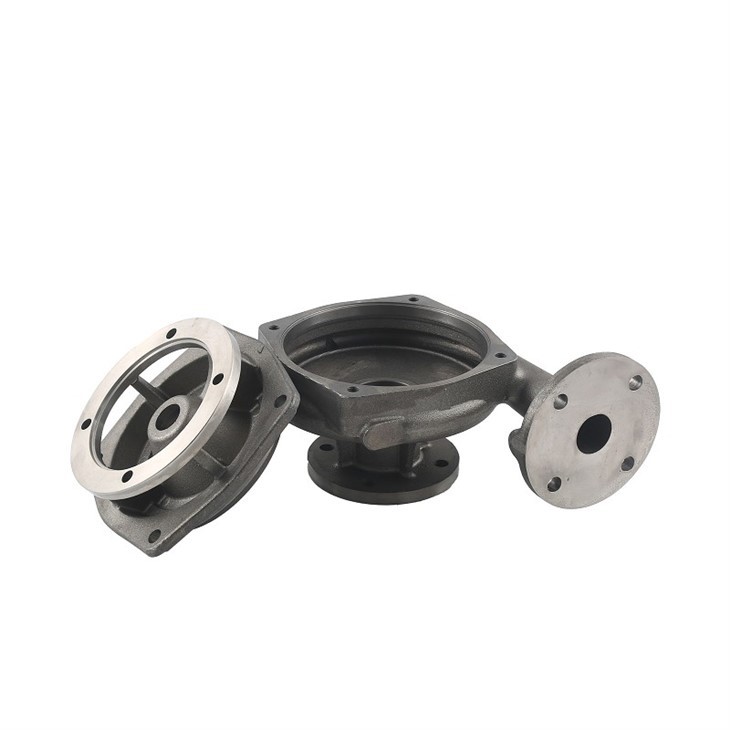
The grain size of ASTM A48 Cl 30 has a direct impact on its strength and ductility. As mentioned earlier, a finer grain size generally leads to higher strength and better ductility. In applications where high strength and the ability to withstand deformation are required, such as in Pump Casting Parts, a finer grain size is preferred.
For example, pump impellers made from ASTM A48 Cl 30 with a fine grain size can better withstand the high - pressure and high - speed fluid flow, reducing the risk of failure due to fatigue or cracking.
Wear Resistance
Wear resistance is another important property affected by grain size. A finer grain size can provide better wear resistance as it offers more grain boundaries, which can impede the movement of dislocations and prevent the propagation of cracks. In applications such as Cast Iron Gear, where the gears are subjected to constant friction and wear, a fine - grained ASTM A48 Cl 30 can extend the service life of the components.
Machinability
While a finer grain size generally offers better mechanical properties, it can sometimes make the material more difficult to machine. A coarser grain size, on the other hand, can improve machinability as the larger grains are easier to cut through. In applications where extensive machining is required, such as in the production of Pump Cover Castings, a slightly coarser grain size may be more suitable.
Measuring Grain Size in ASTM A48 Cl 30
There are several methods available for measuring the grain size in ASTM A48 Cl 30. One of the most common methods is the ASTM E112 standard, which provides a set of procedures for determining the average grain size. This method involves preparing a polished and etched sample of the casting and then comparing the grain structure with a set of standard charts.
Another method is the intercept method, where a straight line is drawn across the microstructure, and the number of grain boundaries intersected by the line is counted. The average grain size can then be calculated based on the length of the line and the number of intersections.
Our Expertise as an ASTM A48 Cl 30 Supplier
As a supplier of ASTM A48 Cl 30, we have extensive experience in controlling the grain size of our castings to meet the specific requirements of our customers. Our state - of - the - art foundry is equipped with advanced technology and equipment that allows us to precisely control the cooling rate, chemical composition, and heat treatment processes.
We work closely with our customers to understand their application needs and provide them with the optimal grain size for their ASTM A48 Cl 30 castings. Whether you need high - strength pump parts, wear - resistant gears, or easily machinable pump covers, we can deliver castings with the right grain size and properties.
Contact Us for Your ASTM A48 Cl 30 Needs
If you are in the market for high - quality ASTM A48 Cl 30 castings, we invite you to contact us for a detailed discussion about your requirements. Our team of experts is ready to assist you in selecting the best grain size and casting solution for your application. We are committed to providing you with the highest level of service and the best - quality products. Let's start the conversation today and see how we can meet your ASTM A48 Cl 30 casting needs.

References
- ASM Handbook, Volume 1: Properties and Selection: Irons, Steels, and High - Performance Alloys. ASM International.
- ASTM A48/A48M - 19 Standard Specification for Gray Iron Castings. ASTM International.
- Fundamentals of Casting Technology by John Campbell. Butterworth - Heinemann.