

Hey there! As a supplier of casting impellers, I've been getting a lot of questions lately about the erosion resistance of these parts. So, I thought I'd take a few minutes to break it down for you and explain what it means, why it matters, and how we ensure our casting impellers can stand up to the test.
First off, let's talk about what erosion resistance actually is. Erosion is the process by which materials are worn away by the action of fluid flow, often containing abrasive particles. In the case of a casting impeller, this fluid could be water, oil, or any other liquid that the impeller is designed to move. When the impeller rotates, it creates a high - velocity flow of the fluid, and if there are abrasive particles in the fluid, they can cause the impeller's surface to wear down over time.
Erosion resistance, then, is the ability of the impeller to resist this wear and tear. A highly erosion - resistant impeller will maintain its shape, size, and performance for a longer period, even when exposed to abrasive fluids. This is crucial because a worn - out impeller can lead to a decrease in pump efficiency, increased energy consumption, and even complete pump failure.
Now, you might be wondering why erosion resistance is so important in a casting impeller. Well, think about it. Impellers are used in a wide range of applications, from industrial pumps to water treatment plants and even in some marine equipment. In many of these applications, the fluid being pumped contains sand, silt, or other abrasive particles. For example, in a submersible pump used in a well, the water might have sand particles in it. If the impeller isn't erosion - resistant, these particles will quickly start to eat away at the impeller's surface, reducing its effectiveness.
In industrial settings, the consequences of a non - erosion - resistant impeller can be even more severe. A pump with a worn impeller can cause production delays, increased maintenance costs, and potential safety hazards. That's why, as a casting impeller supplier, we take erosion resistance very seriously.
So, how do we ensure that our casting impellers have excellent erosion resistance? It all starts with the materials we use. We carefully select high - quality alloys and metals that are known for their durability and resistance to erosion. For example, some of our impellers are made from stainless steel, which has a high chromium content. Chromium forms a protective oxide layer on the surface of the steel, which helps to prevent corrosion and erosion.
Another important factor is the casting process itself. We use advanced casting techniques to ensure that the impellers have a smooth surface finish and a uniform microstructure. A smooth surface reduces the chances of abrasive particles getting stuck and causing damage, while a uniform microstructure ensures that the impeller has consistent mechanical properties throughout.
We also conduct extensive testing on our casting impellers to ensure their erosion resistance. We simulate real - world conditions in our testing facilities, exposing the impellers to abrasive fluids at high velocities for extended periods. By doing this, we can accurately measure how much wear the impellers experience and make any necessary adjustments to our materials or processes.
When it comes to choosing the right casting impeller for your application, it's important to consider the specific requirements of your system. If you're dealing with a highly abrasive fluid, you'll need an impeller with a high level of erosion resistance. On the other hand, if the fluid is relatively clean, you might be able to get away with a less expensive impeller with a lower level of resistance.
As a supplier, we offer a wide range of casting impellers to meet different needs. Whether you're looking for a Submersible Pump Casting Parts for a water well or a Pump Cover Castings for an industrial pump, we've got you covered. And of course, our Casting Impeller range is designed to provide excellent erosion resistance in various applications.
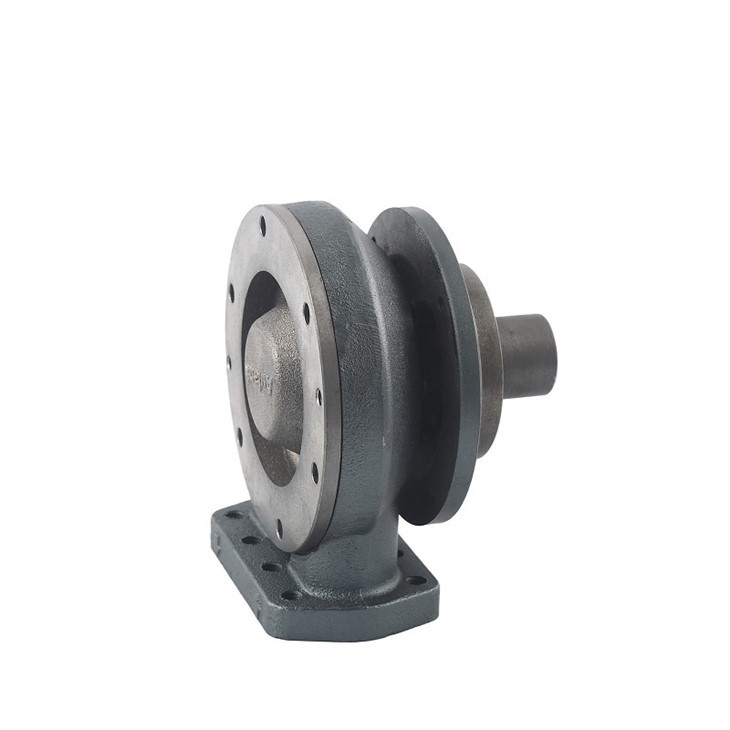

If you're in the market for a casting impeller, I encourage you to reach out to us. We can help you choose the right impeller for your specific needs, and we'll work with you to ensure that you get the best possible product at a competitive price. Our team of experts is always available to answer any questions you might have and to provide you with technical support.
In conclusion, erosion resistance is a critical property of a casting impeller. It can significantly impact the performance, efficiency, and lifespan of a pump. As a supplier, we're committed to providing high - quality casting impellers that offer excellent erosion resistance. So, if you're looking for a reliable impeller for your application, don't hesitate to contact us. Let's work together to find the perfect solution for your pumping needs.
References:
- ASM Handbook Volume 13A: Corrosion: Fundamentals, Testing, and Protection.
- Principles of Pump Engineering by Ian J. Karassik et al.