

Hey there! As a pump casting supplier, I've been dealing with different casting methods for ages. One of the most common questions I get is about the difference between low-pressure casting and high-pressure casting for pumps. So, let's dive right in and break it down.
Low - Pressure Casting
First off, let's talk about low-pressure casting. In this method, molten metal is forced into the mold under relatively low pressure, usually ranging from 10 to 100 kPa. The process starts with the mold being placed on top of a crucible filled with molten metal. A tube is then inserted into the molten metal, and pressure is applied to the surface of the metal in the crucible. This forces the metal up through the tube and into the mold cavity.
One of the big advantages of low-pressure casting is the quality of the castings. Since the metal is introduced into the mold slowly and smoothly, there's less turbulence. This means fewer air bubbles and inclusions in the final product. As a result, the castings have a high density and excellent mechanical properties. For pumps, this is crucial because it ensures the parts can withstand the pressure and flow of the fluid they're handling.
Another benefit is the ability to cast complex shapes. The low-pressure process allows the metal to fill intricate mold cavities evenly, making it ideal for creating parts like Casting Impeller. These impellers need to have precise shapes to ensure efficient fluid flow, and low-pressure casting can deliver that level of accuracy.
However, low-pressure casting also has its drawbacks. It's a relatively slow process compared to high-pressure casting. The low pressure means it takes longer for the metal to fill the mold, which can increase production time. Also, the equipment for low-pressure casting can be more expensive to set up, as it requires a specialized crucible and pressure control system.
High - Pressure Casting
Now, let's move on to high-pressure casting. In this method, molten metal is injected into the mold at high speeds and pressures, typically between 15 and 150 MPa. The process uses a die-casting machine, which consists of a shot chamber, a plunger, and a mold. The molten metal is poured into the shot chamber, and the plunger forces it into the mold cavity at high pressure.

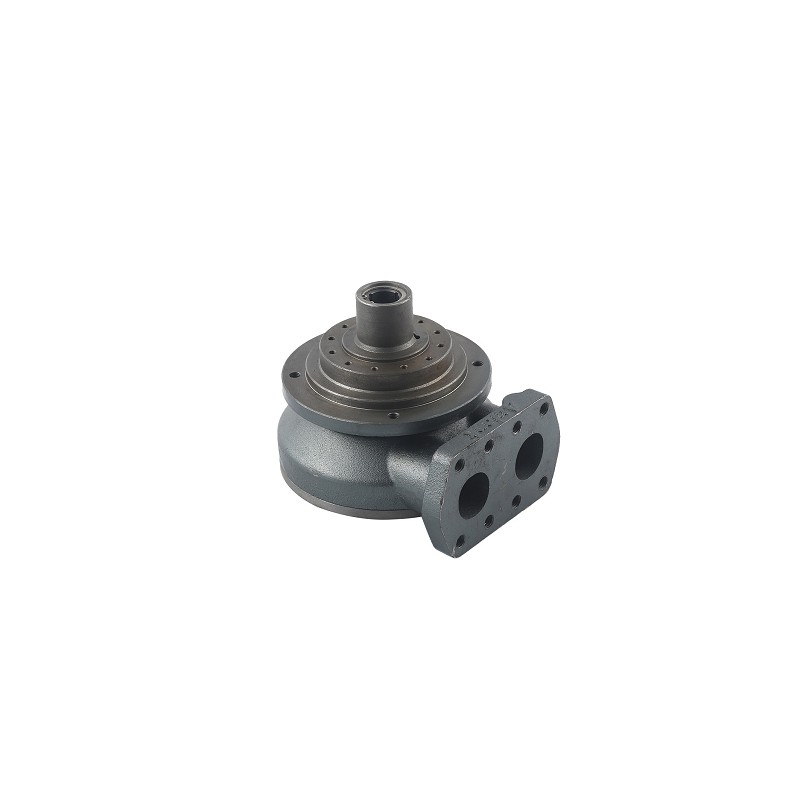
The main advantage of high-pressure casting is speed. It's a much faster process than low-pressure casting, which means higher production rates. This is great for mass-producing pump parts like Pump Casting Parts. If you need a large number of identical parts in a short period, high-pressure casting is the way to go.

High-pressure casting also offers good dimensional accuracy. The high pressure ensures that the metal fills the mold completely and takes on the exact shape of the cavity. This results in parts that have tight tolerances and a smooth surface finish, which is important for the proper functioning of pumps.
But high-pressure casting isn't without its problems. One of the biggest issues is the formation of porosity. The high speed and pressure at which the metal is injected can cause air to be trapped in the mold, leading to voids in the casting. This can weaken the part and reduce its overall quality. Another drawback is that high-pressure casting is not as suitable for casting complex shapes as low-pressure casting. The high pressure can cause the metal to solidify too quickly, preventing it from filling all the nooks and crannies of the mold.
Comparison for Pumps
When it comes to pumps, the choice between low-pressure and high-pressure casting depends on several factors. If you're looking for high-quality, complex parts with excellent mechanical properties, low-pressure casting is the better option. For example, Cf8m Pump parts often require the precision and density that low-pressure casting can provide. These pumps are used in applications where reliability and performance are critical, such as in chemical processing and marine environments.
On the other hand, if you need to produce a large quantity of simple pump parts quickly and cost-effectively, high-pressure casting is the way to go. It's a great choice for standard pump components that don't require the same level of complexity or precision.
In addition to the quality and production rate, cost is also an important consideration. Low-pressure casting generally has higher upfront costs due to the specialized equipment and longer production times. However, the high-quality parts it produces can often justify the cost, especially for high-end applications. High-pressure casting, on the other hand, has lower upfront costs and can be more cost-effective for large-scale production.
Conclusion
So, there you have it! The difference between low-pressure and high-pressure casting for pumps boils down to quality, speed, complexity, and cost. As a pump casting supplier, I've seen firsthand how each method has its own strengths and weaknesses. Whether you need a single, high-quality Casting Impeller or a large batch of Pump Casting Parts, I can help you choose the right casting method for your needs.
If you're in the market for pump castings and want to learn more about which casting method is best for your project, don't hesitate to reach out. I'm always happy to have a chat and discuss your requirements. Let's work together to find the perfect solution for your pump casting needs.
References
- Campbell, J. (2003). Castings. Butterworth-Heinemann.
- Metals Handbook: Casting. (1988). ASM International.