

What is the density of pumpworks castings? This is a question that often arises among engineers, procurement officers, and those involved in the pump manufacturing and related industries. As a supplier of pumpworks castings, I am well - versed in this topic and would like to share some in - depth knowledge.
Understanding the Basics of Castings in Pumpworks
Pumpworks castings are integral components in the construction of pumps. They are used to create various parts such as Pump Cover Castings, which protect the internal mechanisms of the pump, and Pump Casting Parts, which form the core structure of the pump. These castings are made through a process where molten metal is poured into a mold and then allowed to solidify.
The density of a material is defined as its mass per unit volume. In the context of pumpworks castings, density plays a crucial role. It affects the overall weight of the pump, its performance, and even its durability. For example, a casting with a higher density may be stronger but also heavier, which could impact the energy consumption of the pump during operation.
Factors Affecting the Density of Pumpworks Castings
Material Composition
The type of metal used in the casting process is the most significant factor influencing density. Common materials for pumpworks castings include cast iron, stainless steel, and bronze.
- Cast Iron: Cast iron is a popular choice for pump castings due to its good casting properties and relatively low cost. Astm A48 Cl 30 is a common grade of cast iron used in pump applications. The density of cast iron typically ranges from 7.2 to 7.7 g/cm³. This density is relatively high, which gives cast iron castings good strength and wear - resistance.
- Stainless Steel: Stainless steel offers excellent corrosion resistance, making it suitable for pumps handling corrosive fluids. The density of stainless steel can vary depending on its alloy composition but generally falls between 7.5 and 8.0 g/cm³. The higher density of some stainless - steel grades is due to the presence of elements like nickel and chromium.
- Bronze: Bronze is another material used in pump castings, especially in applications where good machinability and corrosion resistance are required. The density of bronze is around 8.5 g/cm³. The high density of bronze is attributed to the presence of copper and other alloying elements.
Casting Process
The casting process can also affect the density of pumpworks castings. In processes like sand casting, which is a common method for pump castings, the porosity of the casting can vary. Porosity refers to the presence of small holes or voids in the casting. Higher porosity means lower density because there is less actual metal per unit volume.
To reduce porosity and increase density, manufacturers may use techniques such as vacuum casting or investment casting. Vacuum casting removes air from the mold cavity, resulting in a more compact and denser casting. Investment casting, on the other hand, uses a wax pattern that is melted out before the molten metal is poured, creating a very precise and dense casting.
Heat Treatment
Heat treatment is often applied to pumpworks castings to improve their mechanical properties. During heat treatment, the casting is heated to a specific temperature and then cooled at a controlled rate. This process can change the microstructure of the metal, which in turn can affect its density.
For example, in some cases, heat treatment can cause the metal to become more dense by eliminating internal stresses and aligning the crystal structure. However, if the heat treatment is not properly controlled, it can also lead to the formation of new phases or the growth of grains, which may have an impact on density.
Importance of Density in Pumpworks Castings
Performance
The density of pumpworks castings directly affects the performance of the pump. A pump with heavier castings (higher density) may require more energy to start and operate. This is because more force is needed to move the heavier components. On the other hand, a casting with a lower density may be lighter but may also be less strong, which could lead to premature failure of the pump.
For example, in a centrifugal pump, the impeller, which is often a pump casting, needs to be balanced and have the right density to ensure efficient fluid flow. If the density of the impeller is not uniform, it can cause vibration, which reduces the pump's efficiency and lifespan.
Durability
Density is also related to the durability of pumpworks castings. A casting with a higher density is generally more resistant to wear and corrosion. The compact structure of a dense casting makes it less likely to be penetrated by corrosive substances or to be worn away by the flow of fluids.

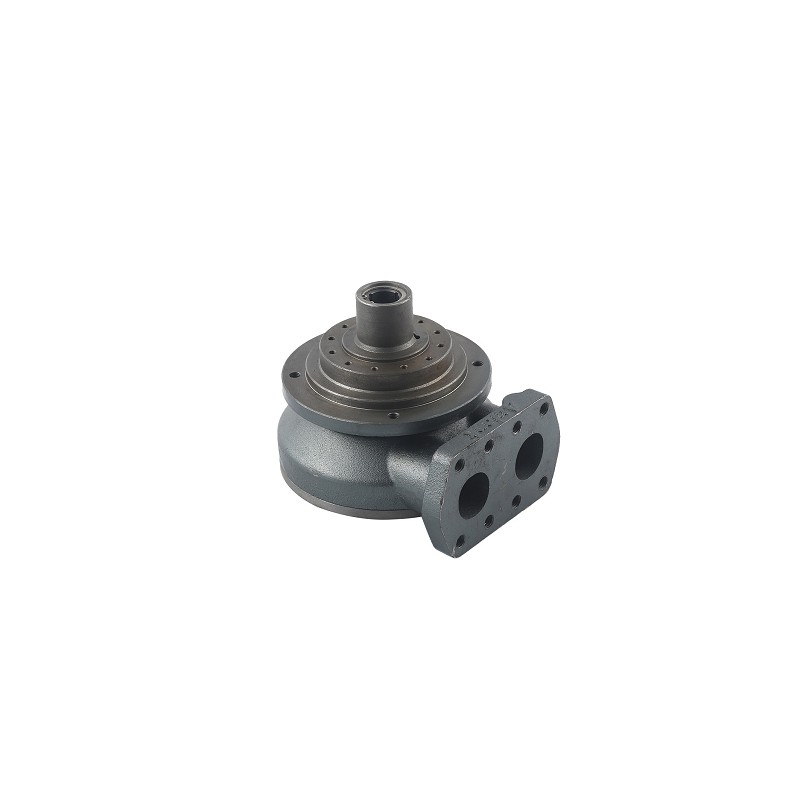
In a pump that handles abrasive fluids, a high - density casting can withstand the erosive forces better than a low - density one. For instance, in a slurry pump, the pump casing, which is a casting, needs to be made of a high - density material to resist the abrasion caused by the solid particles in the slurry.
Cost
The density of pumpworks castings can have an impact on the cost. Materials with higher density are often more expensive because they contain more metal per unit volume. Additionally, the manufacturing processes required to produce high - density castings, such as vacuum casting or precision heat treatment, can also add to the cost.
However, in some cases, the higher cost of a high - density casting may be offset by its longer lifespan and better performance. A pump with high - density castings may require less maintenance and replacement, resulting in lower long - term costs.
Measuring the Density of Pumpworks Castings
There are several methods for measuring the density of pumpworks castings. The most common method is the Archimedes' principle. This method involves weighing the casting in air and then weighing it when it is submerged in a liquid of known density.
The formula for calculating density using Archimedes' principle is:
[ \rho=\frac{m}{V}=\frac{m}{ \frac{m - m_{s}}{\rho_{l}}} ]
where (\rho) is the density of the casting, (m) is the mass of the casting in air, (m_{s}) is the mass of the casting when submerged in the liquid, and (\rho_{l}) is the density of the liquid.
Another method is using x - ray or ultrasonic testing. These non - destructive testing methods can detect internal defects and porosity in the casting, which can be related to its density. By analyzing the data from these tests, engineers can estimate the density of the casting without destroying it.
Conclusion
In conclusion, the density of pumpworks castings is a complex and important characteristic that is influenced by material composition, casting process, and heat treatment. It has a significant impact on the performance, durability, and cost of the pump. As a supplier of pumpworks castings, we understand the importance of providing castings with the right density for each application.
Whether you are looking for a high - density casting for a heavy - duty pump or a lower - density one for a more energy - efficient design, we can provide you with the best solutions. Our team of experts can help you select the appropriate material and casting process to achieve the desired density and performance.
If you are interested in purchasing pumpworks castings or have any questions about density and its impact on pump performance, please feel free to contact us for a detailed discussion and procurement negotiation. We are dedicated to providing high - quality products and excellent service to meet your needs.
References
- Callister, W. D., & Rethwisch, D. G. (2012). Materials Science and Engineering: An Introduction. Wiley.
- ASM Handbook Committee. (2008). ASM Handbook Volume 15: Casting. ASM International.
- Perry, R. H., & Green, D. W. (2007). Perry's Chemical Engineers' Handbook. McGraw - Hill.