

Hey there! As a supplier of ASTM A48 Cl 30, I'm super excited to share with you all the quality control measures we take to ensure top - notch products.
First off, let's talk a bit about what ASTM A48 Cl 30 is. Astm A48 Cl 30 is a type of gray iron casting that's widely used in various industries, especially in pump manufacturing. It has some great properties like good castability, high wear resistance, and excellent machinability. But to make sure it meets the high standards set by ASTM, we've got a bunch of quality control steps in place.
Raw Material Inspection
The quality of ASTM A48 Cl 30 starts with the raw materials. We source our iron and other alloying elements from trusted suppliers. Before we even start the melting process, we conduct a thorough inspection of these raw materials. We check the chemical composition of the iron, making sure it has the right amount of carbon, silicon, manganese, sulfur, and phosphorus. Any deviation from the specified range can affect the final properties of the casting.
We use advanced spectrometers to analyze the chemical composition. These spectrometers can quickly and accurately determine the elemental content of the raw materials. If the composition doesn't meet our requirements, we send the raw materials back to the supplier. This step is crucial because it lays the foundation for a high - quality ASTM A48 Cl 30 casting.
Melting and Pouring Control
Once the raw materials pass the inspection, it's time to melt them in the furnace. We closely monitor the melting process to ensure that the temperature and the melting time are just right. The temperature needs to be high enough to fully melt the iron and the alloying elements, but not too high to cause excessive oxidation.
During the pouring process, we also pay close attention to the flow rate and the pressure. If the pouring is too fast, it can cause turbulence in the mold, which may lead to defects like porosity or inclusions. On the other hand, if the pouring is too slow, the iron may start to solidify before filling the entire mold, resulting in incomplete castings.
We use computer - controlled pouring systems to ensure consistent and accurate pouring. These systems can adjust the flow rate and pressure based on the size and shape of the mold, guaranteeing that each casting is of the same high quality.
Mold Design and Preparation
The mold plays a vital role in the quality of ASTM A48 Cl 30 castings. We have a team of experienced engineers who design the molds according to the specific requirements of our customers. The mold design needs to take into account factors such as the shrinkage rate of the iron, the gating system, and the venting system.
Before using the mold, we carefully prepare it. We clean the mold to remove any dirt, rust, or other contaminants. Then, we apply a coating to the mold surface. This coating helps to improve the surface finish of the casting and prevent the iron from sticking to the mold.
We also conduct regular inspections of the molds to check for any signs of wear or damage. If a mold is damaged, we repair or replace it immediately to avoid producing defective castings.
Heat Treatment
After the castings are removed from the molds, they often undergo heat treatment. Heat treatment is an important step to improve the mechanical properties of ASTM A48 Cl 30. We can adjust the hardness, strength, and ductility of the castings through different heat treatment processes.
For example, annealing is a common heat treatment process for ASTM A48 Cl 30. Annealing can reduce the internal stress in the castings and improve their machinability. We carefully control the heating and cooling rates during the annealing process to ensure that the desired properties are achieved.
Non - Destructive Testing
To detect any internal defects in the castings, we use non - destructive testing methods. One of the most commonly used methods is ultrasonic testing. Ultrasonic testing can detect internal flaws such as cracks, porosity, and inclusions without damaging the casting.
We also use magnetic particle testing for castings that are made of ferromagnetic materials. This method can detect surface and near - surface defects. By using these non - destructive testing methods, we can ensure that all our ASTM A48 Cl 30 castings are free from major defects.
Final Inspection
Before shipping the castings to our customers, we conduct a final inspection. We check the dimensions of the castings to make sure they meet the customer's specifications. We use precision measuring tools such as calipers, micrometers, and coordinate measuring machines (CMMs).
We also inspect the surface finish of the castings. Any surface defects such as roughness, cracks, or burrs are removed through machining or other finishing processes. Only after passing this final inspection are the castings packed and ready to be shipped.
Applications and Related Products
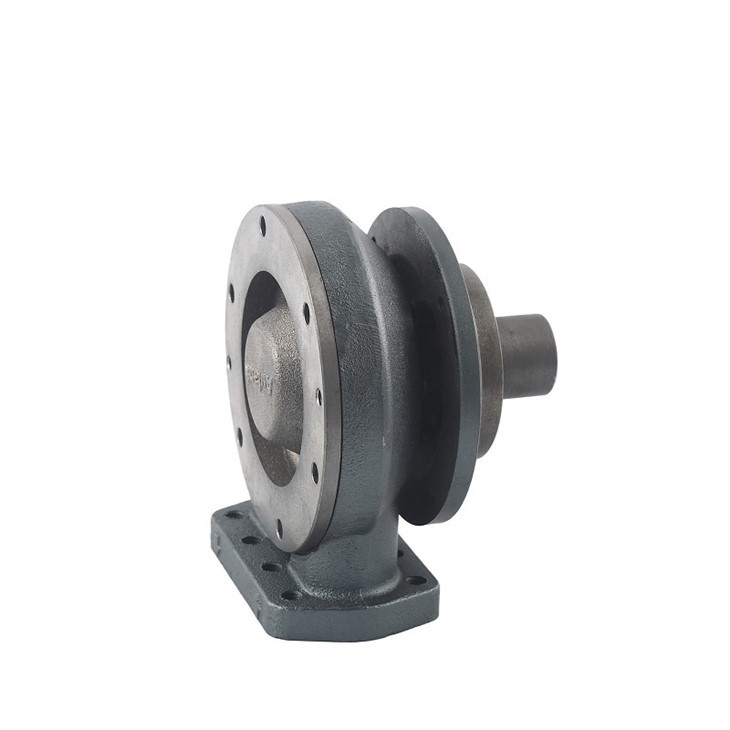
ASTM A48 Cl 30 is widely used in the pump industry. For example, it can be used to make Cf8m Pump components and Submersible Pump Casting Parts. Its good wear resistance and castability make it an ideal material for these applications.
In conclusion, as a supplier of ASTM A48 Cl 30, we take quality control very seriously. From raw material inspection to final inspection, every step is carefully monitored to ensure that our customers receive high - quality products. If you're in the market for ASTM A48 Cl 30 or related products, don't hesitate to contact us for procurement and negotiation. We're always here to provide you with the best products and services.

References
- ASTM International standards for ASTM A48 Cl 30
- Industry - related research papers on gray iron casting quality control