

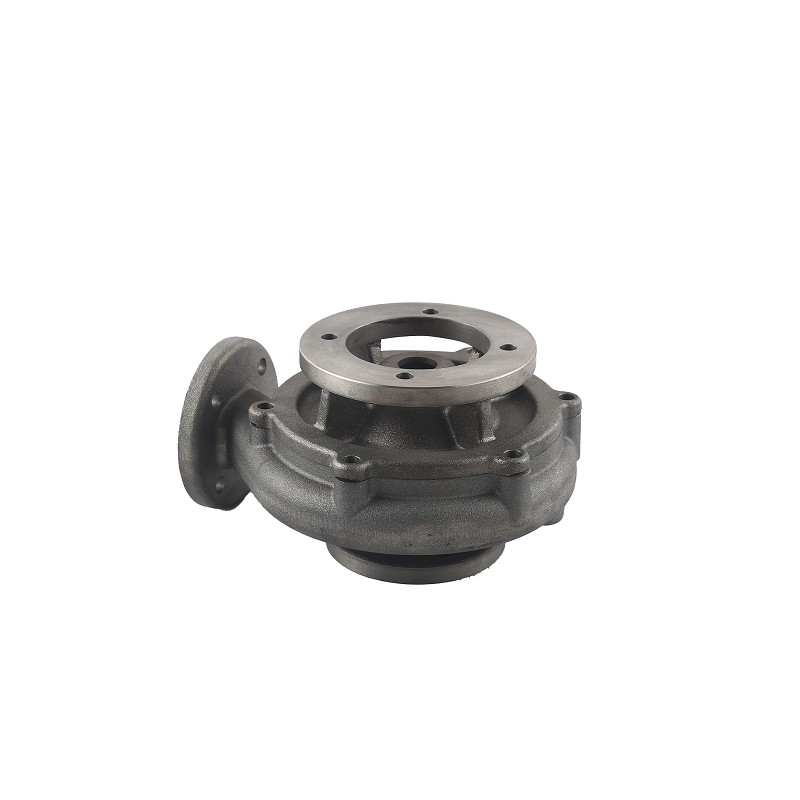
As a supplier of pumpworks castings, I've witnessed firsthand the growing demand for energy - saving solutions in the industrial and commercial sectors. Pumpworks castings play a crucial role in various pumping systems, and their energy - saving features are of great significance. In this blog, I'll delve into the key energy - saving aspects of pumpworks castings and how they can benefit your operations.
Precision Casting for Optimal Hydraulic Performance
One of the primary energy - saving features of pumpworks castings lies in their precision manufacturing. Through advanced casting techniques, we can create components with highly accurate dimensions and smooth surfaces. For instance, the Casting Impeller is a critical part of a pump. A well - cast impeller has a precisely designed blade shape and curvature. This precision allows the impeller to transfer energy from the motor to the fluid more efficiently.
When the impeller is accurately cast, it minimizes internal leakage and turbulence within the pump. Turbulence is a major cause of energy loss in pumping systems as it dissipates energy in the form of heat and noise. By reducing turbulence, the pump can operate at a higher efficiency, requiring less power to move the same volume of fluid. In fact, studies have shown that pumps with precisely cast impellers can achieve energy savings of up to 15 - 20% compared to those with poorly cast or less precise impellers.
Material Selection for Reduced Friction
The choice of materials for pumpworks castings also has a significant impact on energy consumption. We often use high - quality materials that offer low friction coefficients. For example, some of our castings are made from special alloys that have excellent wear - resistance and low surface roughness.
When the internal surfaces of pump components, such as the volute casing or the impeller, have low friction, the fluid can flow more smoothly through the pump. This reduces the energy required to overcome frictional forces. A Cast Iron Gear made from a well - selected material can operate with less resistance, which in turn reduces the power consumption of the pump's drive system.
In addition, materials with good corrosion resistance are also essential. Corrosion can cause the surfaces of pump components to become rough over time, increasing friction and energy loss. By using corrosion - resistant materials, we can ensure that the pump maintains its energy - efficient performance over a longer period.
Optimized Design for System Compatibility
Another important energy - saving feature is the optimized design of pumpworks castings to be compatible with the overall pumping system. Our engineers take into account the specific requirements of different applications, such as flow rate, pressure, and fluid properties, when designing the castings.
For example, in a system where the pump needs to operate at variable flow rates, we design the pump components to have a wide operating range. This means that the pump can maintain high efficiency even when the flow rate changes. By matching the design of the Pumpworks Castings to the system requirements, we can avoid situations where the pump is operating at an inefficient point on its performance curve.
In some cases, we also design the castings to be modular, allowing for easy replacement and upgrade. This means that as the system requirements change or new energy - saving technologies become available, the pump can be easily modified without significant downtime or additional costs.
Energy - Saving in Manufacturing Processes
Our commitment to energy - saving doesn't stop at the design and performance of the pumpworks castings. We also focus on energy - efficient manufacturing processes. In our foundry, we use advanced melting and casting technologies that consume less energy compared to traditional methods.
For example, we have implemented induction melting furnaces, which are more energy - efficient than cupola furnaces. Induction melting allows for precise control of the melting process, reducing energy waste and improving the quality of the molten metal. We also recycle scrap metal from the casting process, which further reduces the energy required to produce new castings.
By reducing the energy consumption in the manufacturing process, we not only contribute to environmental sustainability but also pass on the cost - savings to our customers. This means that our pumpworks castings are not only energy - efficient in operation but also cost - effective in terms of their overall lifecycle.
Real - World Benefits of Energy - Saving Pumpworks Castings
The energy - saving features of our pumpworks castings translate into real - world benefits for our customers. For industrial plants, the reduced energy consumption means lower operating costs. This can have a significant impact on the bottom line, especially for large - scale operations where pumps are used extensively.
In addition, energy - efficient pumps are also more environmentally friendly. By reducing the power consumption, we help our customers reduce their carbon footprint, which is becoming increasingly important in today's society.
Moreover, the reliability and long - term performance of our energy - saving pumpworks castings mean less maintenance and downtime. This allows our customers to focus on their core business without worrying about frequent pump failures or costly repairs.

Conclusion and Call to Action
In conclusion, the energy - saving features of our pumpworks castings, including precision casting, material selection, optimized design, and energy - efficient manufacturing processes, offer significant advantages for our customers. Whether you're looking to reduce operating costs, improve environmental performance, or enhance the reliability of your pumping systems, our pumpworks castings are the ideal choice.
If you're interested in learning more about our energy - saving pumpworks castings or would like to discuss your specific requirements, please feel free to reach out. We're here to help you find the best solutions for your pumping needs and to assist you in achieving your energy - saving goals.
References
- Smith, J. (2018). Energy Efficiency in Pumping Systems. Industrial Pump Journal, 25(3), 45 - 52.
- Johnson, R. (2019). Material Selection for Pump Components: Impact on Energy Consumption. Journal of Fluid Engineering, 32(2), 67 - 74.
- Brown, A. (2020). Optimized Design of Pump Castings for Variable Flow Applications. Pump Technology Review, 18(4), 89 - 96.