

Hey there! As a supplier of pump cover castings, I've been in the industry for quite some time, and I've seen firsthand how crucial the compatibility between pump cover castings and other pump components is. In this blog, I'll share with you what those compatibility requirements are and why they matter so much.
First off, let's talk about the basics. A pump is a device that moves fluids by mechanical action. It consists of several components, including the pump cover casting, the impeller, the casing, and various other parts. Each of these components plays a specific role, and they all need to work together seamlessly for the pump to function properly.
Compatibility in Terms of Dimensions
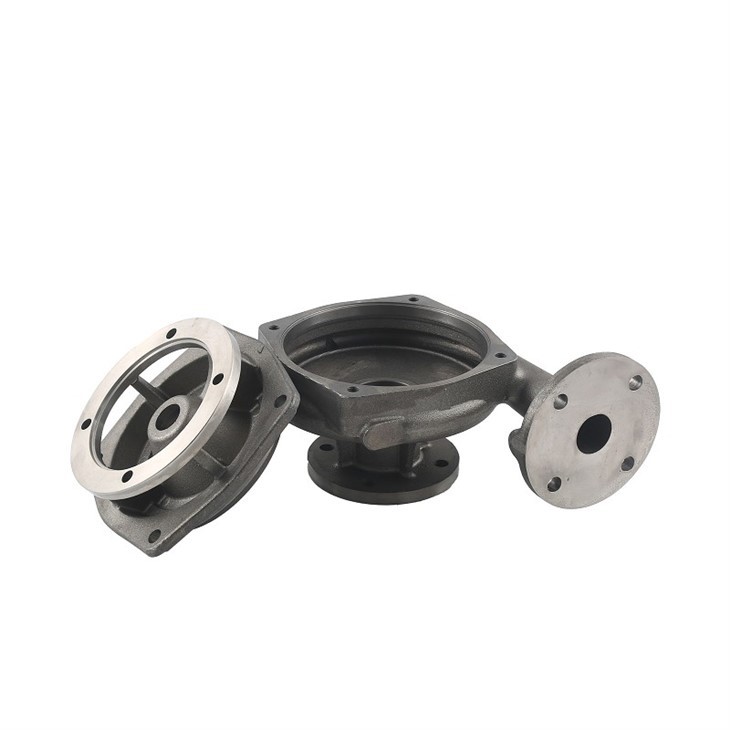
One of the most obvious compatibility requirements is in terms of dimensions. The pump cover casting needs to fit precisely with the other components of the pump. For example, the holes and mounting points on the pump cover must align perfectly with those on the pump casing. If there's even a slight misalignment, it can lead to leaks, reduced efficiency, and even damage to the pump over time.
Let's say you're using a Casting Impeller. The impeller rotates inside the pump casing, and the pump cover is responsible for enclosing this area. The diameter of the opening in the pump cover where the impeller shaft passes through must match the size of the shaft and the impeller hub. If it's too large, there'll be excessive vibration and noise, and the pump might not be able to build up the necessary pressure. If it's too small, the impeller won't be able to rotate freely, and it could cause the motor to overheat.
Similarly, when it comes to Submersible Pump Casting Parts, the pump cover casting needs to fit snugly with the rest of the submersible pump assembly. Submersible pumps are designed to operate underwater, so any gaps or improper fits can allow water to seep into the motor compartment, leading to electrical failures and pump breakdowns.
Compatibility in Material Properties
Another important aspect of compatibility is the material properties of the pump cover casting and other components. Different pump applications require different materials to withstand the specific conditions they'll be exposed to.
For instance, if the pump is used to handle corrosive fluids, both the pump cover casting and the other components need to be made of corrosion-resistant materials. Stainless steel is a popular choice in such cases because it can resist the effects of many chemicals and acids. If the pump cover is made of a material that's not corrosion-resistant while the other components are, the pump cover will start to degrade over time, which can compromise the integrity of the entire pump.
On the other hand, if the pump is operating in high-temperature environments, the materials need to have good heat resistance. Cast iron is often used in pumps that handle hot fluids because it can withstand high temperatures without losing its strength. However, if the pump cover casting is made of a material with poor heat resistance, it could warp or crack under the heat, causing the pump to malfunction.
Let's also consider the Cast Iron Gear. Gears are an essential part of many pumps, and they need to mesh properly with each other. The material of the pump cover casting should be compatible with the cast iron gear in terms of hardness and wear resistance. If the pump cover is too soft, it could wear out quickly due to the friction caused by the rotating gear. If it's too hard, it could cause excessive wear on the gear itself.
Compatibility in Surface Finish
The surface finish of the pump cover casting also plays a role in its compatibility with other pump components. A smooth surface finish is often required to ensure proper sealing and reduce friction.
When the pump cover is in contact with the pump casing, a smooth surface can help create a tight seal, preventing leaks. If the surface of the pump cover is rough, it might not be able to form a proper seal, even if the dimensions are correct. This can lead to fluid leakage, which not only reduces the efficiency of the pump but can also be a safety hazard in some applications.
In addition, a smooth surface finish on the pump cover can reduce friction between the moving parts inside the pump. For example, if the impeller is rotating close to the pump cover, a rough surface on the cover can cause drag, which in turn requires more energy to operate the pump. This can increase the operating costs and shorten the lifespan of the pump.
Compatibility in Assembly and Installation
Finally, the pump cover casting needs to be compatible with the assembly and installation process of the pump. It should be easy to install and remove for maintenance and repair purposes.
The design of the pump cover should allow for easy access to the internal components of the pump. For example, it should have enough clearance for tools to be used to disassemble and reassemble the pump. If the pump cover is difficult to remove, it can make maintenance tasks time-consuming and costly.
Moreover, the pump cover should be designed in such a way that it can be installed correctly without any special skills or tools. This ensures that the pump can be assembled quickly and accurately, reducing the chances of errors during the installation process.
In conclusion, the compatibility between pump cover castings and other pump components is essential for the proper functioning, efficiency, and longevity of the pump. As a supplier of pump cover castings, I understand the importance of meeting these compatibility requirements. We use advanced manufacturing techniques and high-quality materials to ensure that our pump cover castings are compatible with a wide range of pump components.
If you're in the market for pump cover castings or have any questions about compatibility requirements, I'd love to hear from you. Feel free to reach out to us for more information and to discuss your specific needs. We're here to help you find the perfect pump cover casting that'll work seamlessly with your other pump components.

References
- "Pump Handbook" by Igor J. Karassik et al.
- "Centrifugal Pumps: Design and Application" by Heinz P. Bloch and Fred K. Geitner.
- Various industry standards and guidelines related to pump manufacturing and assembly.