

The phase composition of ASTM A48 Cl 30 plays a crucial role in determining its properties, which in turn significantly impacts its performance in various applications. As a reliable supplier of ASTM A48 Cl 30, I have witnessed firsthand the importance of understanding these relationships. In this blog, we will delve into how the phase composition affects the properties of ASTM A48 Cl 30 and explore its implications for different industries.
Phase Composition Basics of ASTM A48 Cl 30
ASTM A48 Cl 30 is a gray cast iron grade, and its phase composition primarily consists of graphite and a metallic matrix. The graphite in ASTM A48 Cl 30 exists in the form of flakes. These graphite flakes are dispersed throughout the metallic matrix, which is typically composed of ferrite, pearlite, or a combination of both.
The proportion of ferrite and pearlite in the metallic matrix can vary depending on the casting process and heat treatment. Ferrite is a soft and ductile phase, while pearlite is a harder and stronger phase. The presence of graphite flakes also has a significant influence on the properties of the material. Graphite is relatively soft and has a lubricating effect, which can reduce friction and wear.
Influence on Mechanical Properties
Tensile Strength
The phase composition has a direct impact on the tensile strength of ASTM A48 Cl 30. Pearlite has a higher strength compared to ferrite. When the proportion of pearlite in the metallic matrix increases, the tensile strength of the material also tends to increase. However, an excessive amount of pearlite can make the material more brittle.
Graphite flakes act as stress concentrators. Under tensile loading, cracks can initiate at the tips of the graphite flakes, which can reduce the overall tensile strength of the material. Therefore, a proper balance between the graphite content and the proportion of ferrite and pearlite in the matrix is essential to achieve the desired tensile strength.
Hardness
Hardness is another important mechanical property affected by the phase composition. Pearlite is harder than ferrite, so increasing the amount of pearlite in the matrix will increase the hardness of ASTM A48 Cl 30. The size and distribution of graphite flakes also play a role in hardness. Smaller and more uniformly distributed graphite flakes can result in a more homogeneous hardness distribution in the material.

Ductility
Ductility is the ability of a material to deform plastically before fracture. Ferrite is more ductile than pearlite. Therefore, a higher proportion of ferrite in the metallic matrix will generally result in better ductility of ASTM A48 Cl 30. The presence of graphite flakes can also affect ductility. Large and irregular graphite flakes can reduce the ductility of the material by acting as sites for crack initiation and propagation.
Impact on Wear Resistance
The phase composition of ASTM A48 Cl 30 has a significant influence on its wear resistance. The graphite flakes in the material act as a solid lubricant, which can reduce friction and wear. When the material is in contact with another surface, the graphite flakes can be smeared onto the contact surface, forming a lubricating film that reduces direct metal-to-metal contact.
The hardness of the metallic matrix also affects wear resistance. A harder matrix can resist wear better than a softer one. Therefore, a higher proportion of pearlite in the matrix can improve the wear resistance of ASTM A48 Cl 30. However, the balance between hardness and ductility is crucial. If the material is too hard and brittle, it may be more prone to chipping and spalling during wear.
Influence on Machinability
Machinability is an important consideration in the manufacturing process. The phase composition of ASTM A48 Cl 30 affects its machinability in several ways. The graphite flakes in the material act as chip breakers, which can improve the chip formation during machining. This results in better surface finish and reduced tool wear.
Ferrite is more easily machined than pearlite. A higher proportion of ferrite in the matrix can improve the machinability of ASTM A48 Cl 30. However, the presence of excessive graphite can also cause problems during machining, such as tool build-up and poor surface finish. Therefore, optimizing the phase composition is necessary to achieve good machinability.
Applications and Phase Composition Requirements
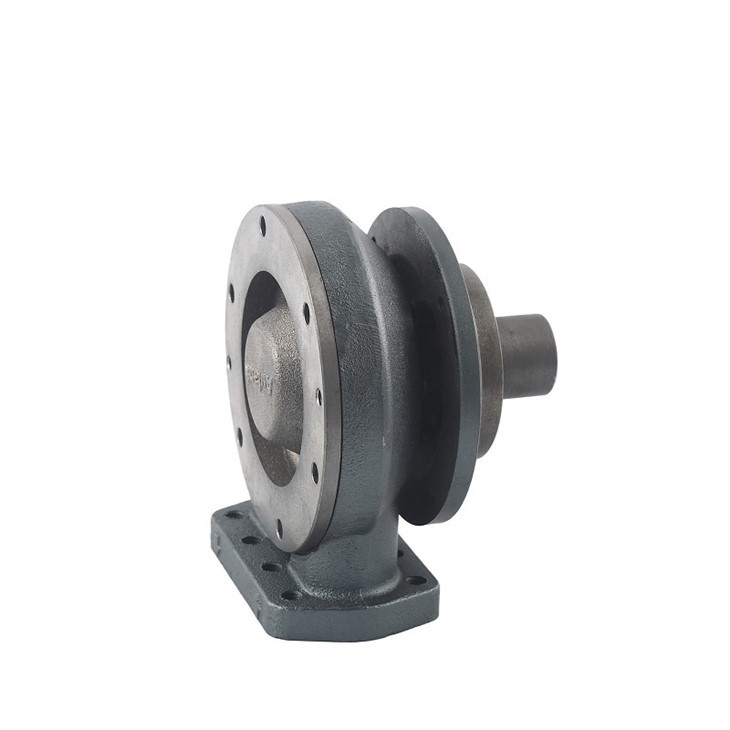
ASTM A48 Cl 30 is widely used in various applications, such as Pump Cover Castings and Submersible Pump Casting Parts. In pump applications, the material needs to have good wear resistance and mechanical properties to withstand the harsh operating conditions.
For pump cover castings, a balance between hardness and ductility is required. A moderate amount of pearlite in the matrix can provide sufficient hardness to resist wear, while the presence of ferrite can ensure some ductility to prevent cracking. The graphite content should also be optimized to provide the lubricating effect and reduce friction.
In submersible pump casting parts, the material needs to have good corrosion resistance in addition to wear resistance and mechanical properties. The phase composition can affect the corrosion resistance of the material. For example, a more homogeneous microstructure with a proper balance of phases can reduce the likelihood of galvanic corrosion.
Quality Control and Phase Composition
As a supplier of Astm A48 Cl 30, we pay close attention to the phase composition of the material to ensure its quality. We use advanced metallurgical analysis techniques, such as optical microscopy and scanning electron microscopy, to analyze the phase composition of our products.
By controlling the casting process parameters, such as pouring temperature, cooling rate, and alloying elements, we can precisely control the phase composition of ASTM A48 Cl 30. This allows us to produce materials with consistent properties that meet the specific requirements of our customers.
Conclusion
In conclusion, the phase composition of ASTM A48 Cl 30 has a profound impact on its mechanical properties, wear resistance, and machinability. Understanding the relationship between phase composition and properties is essential for optimizing the performance of the material in various applications.
As a trusted supplier of ASTM A48 Cl 30, we are committed to providing high-quality products with the desired phase composition. If you are in need of ASTM A48 Cl 30 for your specific application, we invite you to contact us for further discussion and procurement negotiation. We have the expertise and experience to meet your requirements and provide you with the best solutions.
References
- Metals Handbook, Volume 1: Properties and Selection: Irons, Steels, and High-Performance Alloys, ASM International.
- Cast Iron Technology: A Practical Guide, CRC Press.
- ASTM A48/A48M - 18 Standard Specification for Gray Iron Castings.